![Do shops need licensed security guards in [city]](https://leadelementsecurity.co.uk/wp-content/uploads/2026/06/Do-Shops-Need-Licensed-Security-Guards-In-The-UK-1024x683.webp "Do Shops Need Licensed Security Guards In The UK | Lead Element Security Group Ltd")
Table of Contents
- The Short Answer: When Shops Need Licensed Security Guards
- What Counts As Licensable Security Work In A Shop?
- Common Retail Scenarios: Do You Need An SIA-Licensed Guard?
- In-House Vs Contracted Guards: Does It Change The Licensing Rules?
- Which SIA Licence Do Retail Security Staff Need?
- How To Check An SIA Licence (And What To Look For)
- What Happens If A Shop Uses Unlicensed Security?
- Retail Security Compliance Checklist (Practical Steps)
- FAQ: Shop Security Licensing In The UK
- Fun Fact: Why SIA Licensing Exists
- Conclusion: Do Shops Need Licensed Security Guards?
Direct Answer: In most cases, shops do not legally need security guards. However, if you use guards for licensable security work, they must hold the correct SIA licence. This usually includes security guarding (including store detectives) and door supervision (for managing entry and dealing with disorder). Non-security customer service roles do not usually require a licence.
Retailers often ask this after a spike in shoplifting, antisocial behaviour, or staff safety concerns. The key point is simple. The law does not force most shops to hire security, but it does regulate certain security activities.
If you assign licensable duties to someone, whether they are contracted or in-house, you must ensure they are properly licensed. This guide explains what counts as licensable work, which SIA licence applies to common shop-floor scenarios, how to verify licences, and practical compliance steps you can take straight away.
The Short Answer: When Shops Need Licensed Security Guards
- Shops Are Not Usually Required To Have Security: There is no general UK law that every retailer must employ security guards.
- SIA Licensing Applies To Specific Activities: If someone is carrying out licensable security work, they must hold the correct licence.
- Common Retail Licensable Roles: Security guarding (including store detectives) and door supervision are the most typical.
- In-House Staff Can Still Need SIA Licences: Hiring internal security does not automatically avoid licensing requirements.
What “Licensed” Means In The UK (SIA Licensing In Brief)
In the UK, many private security roles are regulated by the Security Industry Authority (SIA). The legal framework comes from the Private Security Industry Act 2001. This created offences for carrying out certain security activities without the right licence.
The SIA is the regulator, and its official information is available via GOV.UK, Security Industry Authority (SIA). In practice, “licensed” usually means the individual holds a valid SIA front line licence for the activity they perform, such as Security Guarding, Door Supervision, or CCTV.
Important: This article is general guidance, not legal advice. If you are unsure whether a role is licensable, check SIA guidance and get professional advice before deploying staff.
What Counts As Licensable Security Work In A Shop?
A helpful way to think about licensable work is this: Are you paying someone to protect people, property, or premises by preventing, deterring, or responding to incidents? If yes, licensing is often involved.
Security Guarding (Including Store Detectives And Loss Prevention)
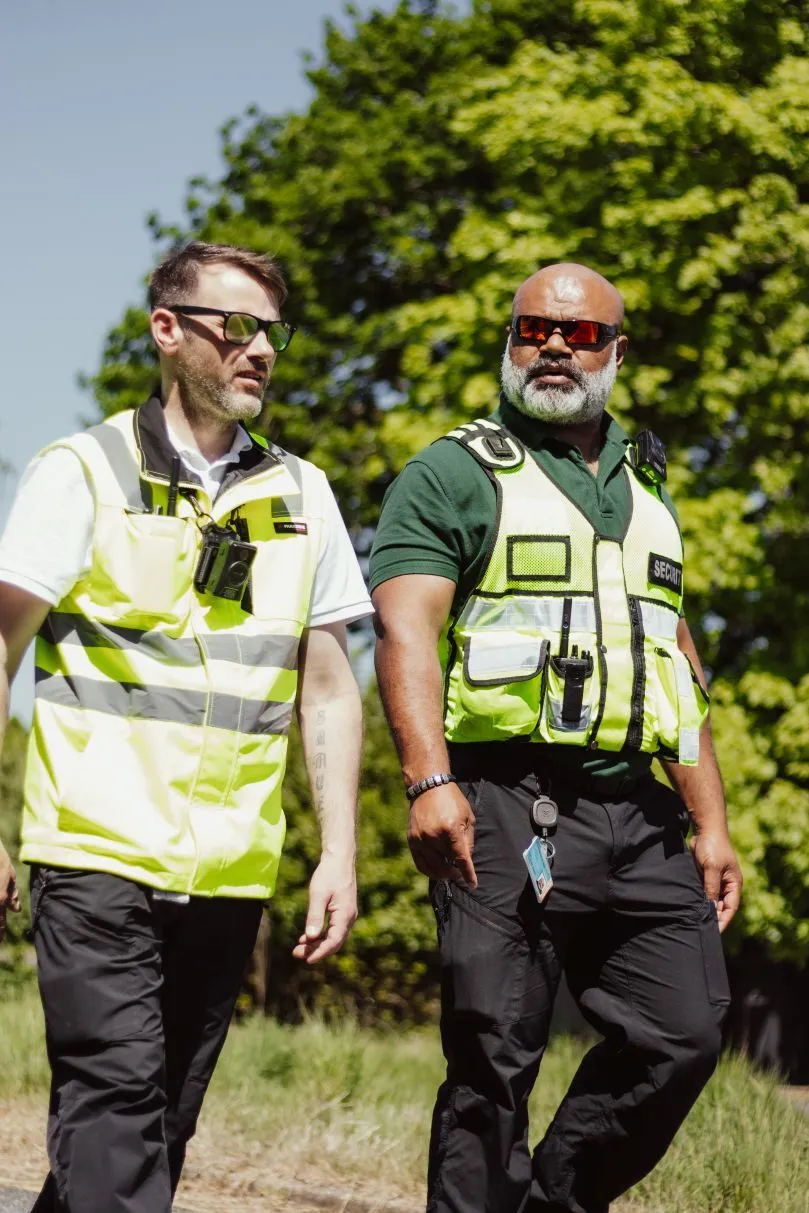
Retail security guarding commonly includes:
- Patrolling and Monitoring: A visible presence on the shop floor to deter theft and disorder.
- Observing Suspected Theft: Monitoring behaviour, staying alert, and communicating with staff.
- Responding To Incidents: De-escalation, calling the police, preserving evidence, and writing incident reports.
- Store Detectives (Plain Clothes): Loss prevention activity can still count as security guarding if the purpose is protecting the store and goods.
If the duties are genuinely security guarding, an SIA licence is usually required.
Door Supervision (When A Shop Needs A Door Supervisor Licence)
Door supervision is common in retail settings where conflict at the entrance is more likely. This may be during busy periods, local disorder, or heightened theft risk. Door supervision can include:
- Controlling Entry and Exit: Managing queues, refusing entry, and enforcing conditions of entry.
- Preventing Disorder: Dealing with aggressive behaviour at or near the entrance.
- Searching Or Screening: Where applicable and lawful, as part of entry control (common in events, less common in everyday retail).
If the role is front-of-house security and includes conflict management at entry points, a Door Supervisor licence is often the correct one.
CCTV And Public Space Surveillance (When Operators Need A Licence)
If a person is employed to monitor CCTV for security purposes, they may need an SIA Public Space Surveillance (CCTV) licence. This is most relevant when:
- CCTV Is Actively Monitored: Staff watch live feeds to spot incidents and direct responses.
- Monitoring Is A Primary Security Function: It is not just an occasional check by a manager.
- Images Are Used For Incident Response: For example, identifying suspects, coordinating with guards, or providing evidence.
You must also comply with data protection rules for CCTV and any body-worn video. Use ICO guidance on CCTV and video surveillance as a baseline.
Roles That Usually Do Not Require An SIA Licence (E.g., Greeters, Marshals, Customer Service)
Many shops use staff to improve customer flow and reduce friction, without giving them security duties. Roles that are usually not licensable include:
- Greeters and Customer Service Hosts: Welcoming customers, answering questions, and guiding them to tills.
- Queue Marshals (Non-Security): Directing customers where to stand, without refusing entry or dealing with disorder.
- Stock Assistants And Floor Staff: Normal retail duties, even if they report concerns to management.
Practical risk: A role can drift into licensable activity if you ask a “greeter” to challenge suspected theft, physically intervene, or refuse entry due to behaviour. Clear job design matters.
Common Retail Scenarios: Do You Need An SIA-Licensed Guard?
Use the scenarios below to map what you want someone to do. Then decide whether licensing is likely required, and which licence type is the best fit.
Deterring Shoplifting On The Shop Floor
- If They Are Acting As A Visible Guard: An SIA Security Guard licence is usually required.
- If They Are A Plain-Clothes Store Detective: An SIA licence is still usually required if their purpose is loss prevention and incident response.
- If They Are Only Providing Customer Service: An SIA licence is usually not required, as long as they are not performing security guarding duties.
Managing Queues, Entry Limits, Or Refusing Entry
- If They Are Refusing Entry Or Managing Disorder At The Door: A Door Supervisor licence is commonly needed.
- If They Are Only Directing Customer Flow Politely: A non-licensable marshal role may be possible, but keep the duties tightly defined.
Handling Aggressive Customers And Incidents
- If De-Escalation And Incident Response Is Their Job: This is usually licensable security work, so the appropriate SIA licence is required.
- If They Are A Supervisor Called Occasionally: A retail manager responding as part of normal employment is different from hiring someone specifically as security.
Whatever your approach, you still have health and safety duties around workplace violence risk assessment and control measures. See HSE guidance on work-related violence for practical steps.
Working Late Nights, Lone Working, Or High-Value Stock
- If The Purpose Is Premises Protection: Lock-up support, patrols, and staff protection are typical security guarding tasks, and usually require an SIA licence.
- If You Need Mobile Support: Consider scheduled patrols as part of a broader plan; see security patrol contractors.
In-House Vs Contracted Guards: Does It Change The Licensing Rules?
The licensing requirement is based on the activity, not who signs the payslip. In other words, in-house does not automatically mean unlicensed. If your employee carries out licensable conduct, they may still need the relevant SIA licence.
Key Differences In Responsibility (Shop Owner Vs Security Provider)
- Shop Owner Responsibility: Ensure anyone deployed on your site is correctly licensed for their duties. Make sure your instructions do not push staff into unlawful activity.
- Security Provider Responsibility: A professional provider should supply licensed personnel, clear operating procedures, and documented incident reporting processes.
- Shared Risk In Practice: If an incident occurs and the role was unlicensed or unclear, the commercial, reputational, and insurance impact can affect both parties.
If you want support designing a compliant retail guarding brief, explore manned guarding or bespoke security with Lead Element Security.
Which SIA Licence Do Retail Security Staff Need?
Below is a practical mapping of common retail security tasks to likely SIA licence types. Always confirm the exact requirement for your site and assignment.
| Retail Role Or Duty | Typical SIA Licence | Notes |
|---|---|---|
| Shop-floor deterrence, patrols, incident response | Security Guard | Common for retail guarding and loss prevention presence. |
| Plain-clothes store detective and loss prevention | Security Guard | Usually licensable if the purpose is preventing or detecting theft and managing incidents. |
| Entry control, refusing entry, managing disorder at the door | Door Supervisor | Often appropriate when conflict management at entrances is a key part of the job. |
| Dedicated CCTV monitoring for security purposes | Public Space Surveillance (CCTV) | Also requires strong data protection controls, signage, and disciplined retention. |
Security Guard Licence: Typical Shop-Floor Guarding And Store Detective Duties
This is the most common licence for retail guarding. It covers duties like monitoring, patrolling, deterrence, and responding to incidents on the shop floor.
Door Supervisor Licence: Higher-Risk Front-Of-House Control And Conflict
If your security team routinely controls entry, refuses entry, deals with disorder at the entrance, or manages queues where tensions run high, door supervision is often the right licence category.
CCTV And Public Space Surveillance Licence: Monitoring And Evidence
If someone’s job is to actively monitor CCTV to protect the premises, they may need a CCTV licence. Separately, you must handle CCTV lawfully. That includes clear signage, sensible retention periods, and controlled access to footage.
How To Check An SIA Licence (And What To Look For)
If you hire security, checking licences should be part of onboarding. It should not be a one-off tick-box exercise.
Checking The SIA Public Register
You can verify whether someone holds an SIA licence by using the official SIA Register of Licence Holders. Build this into your contractor management or staff vetting routine.
Spotting Red Flags (Expired Badge, Wrong Licence Type, Name Mismatch)
- Expired Or Suspended Licence: Confirm the validity dates, not just that a badge exists.
- Wrong Licence Type: For example, a door supervision role being covered by a different licence category.
- Name Does Not Match: Treat mismatches as a serious compliance issue. Pause deployment until it is resolved.
- “Badge Not Required” Claims: If the duties are security guarding or door supervision, challenge assumptions and re-check requirements.
What Happens If A Shop Uses Unlicensed Security?
Using unlicensed staff for licensable activity can create serious legal and commercial exposure. The Private Security Industry Act 2001 sets out offences connected to unlicensed licensable conduct.
Legal And Financial Risks (Offences, Enforcement, Reputational Damage)
- Regulatory Enforcement: Investigations can start after incidents, complaints, or routine checks.
- Insurance And Liability Issues: After a serious incident, insurers may question whether you used appropriately licensed and trained personnel.
- Reputational Harm: Public-facing incidents involving unlicensed security can damage customer trust and staff confidence.
- Operational Disruption: Removing staff at short notice can leave your site exposed, especially during peak trading.
Retail Security Compliance Checklist (Practical Steps)
If you want a simple decision tool, use the steps below as a print-friendly checklist for your store or multi-site operation.
- Step 1: Define the Purpose: Decide if you want customer service support or security guarding to prevent and respond to incidents.
- Step 2: List The Actual Duties: Include entry control, refusal of entry, incident response, patrols, evidence handling, and liaison with the police.
- Step 3: Decide If Duties Are Licensable: If the role includes protecting premises and responding to theft or disorder, assume licensing is required until you confirm otherwise.
- Step 4: Match Duties To Licence Type: Use the role-to-licence table above, and confirm using SIA guidance.
- Step 5: Verify Licences Before The First Shift: Use the SIA public register, then re-check periodically.
- Step 6: Document Assignment Instructions: Make sure staff know what they can do, and what must be escalated.
- Step 7: Review Data Protection If Using CCTV Or Body-Worn Video: Apply ICO principles on lawful use, signage, retention, and access control.
Define The Role Properly (Duties, Uniform, Use Of Force, Incident Reporting)
A clear role definition prevents accidental non-compliance. Your hiring brief should include:
- Duties And Boundaries: What the guard must do, and what they must never do.
- Uniform And Identification: Whether the role is overt or covert, and how staff are introduced to store teams.
- Incident Reporting: Minimum report standards, evidence capture, and escalation routes.
- Conflict Management Expectations: A de-escalation-first approach, and when to call the police.
If you need a guard presence that still feels customer-friendly, consider concierge security styles in suitable retail environments.
CCTV, Body-Worn Video And Data Protection (UK GDPR And ICO Basics)
If you deploy CCTV or body-worn video:
- Have Clear Signage: Tell customers and staff that recording is taking place, and why.
- Set A Retention Period: Keep footage only as long as needed for the stated purpose.
- Restrict Access: Limit who can view, export, or share footage. Keep audit trails where possible.
- Handle Requests Properly: Be prepared for subject access requests and law enforcement requests.
Use the ICO’s CCTV and video surveillance guidance as your baseline.
Training, Vetting, And Insurance Considerations
- Training Beyond Licensing: Site-specific induction, emergency procedures, radio use, and incident report writing.
- Vetting and Right to Work: Ensure appropriate screening and identity checks are completed.
- Insurance Fit: Confirm your business insurance aligns with your security arrangements. Make sure contractors hold appropriate cover where relevant.
To see how Lead Element Security approaches real deployments, browse case studies or explore the wider range of security services.
FAQ: Shop Security Licensing In The UK
Can Retail Staff Detain Shoplifters?
Retail staff and security should prioritise safety and follow company policy. In limited circumstances, citizens can detain someone, but the legality depends on the situation and must be handled carefully. In practice, many retailers focus on observation, de-escalation, and calling the police rather than physical intervention.
Do Bouncers Outside A Shop Always Need A Door Supervisor Licence?
If someone is controlling entry, refusing entry, and dealing with disorder at the door, that is commonly door supervision and typically requires a Door Supervisor licence. If they are genuinely performing non-security duties only, such as purely directing queues, it may be non-licensable. Role drift is common, so define duties tightly.
Do Plain-Clothes Store Detectives Need An SIA Licence?
Often, yes. If the person is employed to detect and deter theft and respond to incidents as a security function, it is typically licensable security guarding even if they do not wear a uniform.
Does A Security Company Need To Be SIA Approved Contractor Scheme (ACS)?
ACS approval is not the same as individual licensing, and it does not replace the need for the correct SIA licences. Many buyers look for extra assurance, such as audited processes and quality management. You should still verify each operative’s SIA licence and ensure the assignment instructions match the licensed activity.
Fun Fact: Why SIA Licensing Exists
The UK’s private security sector is one of the largest in Europe. SIA licensing was introduced after the Private Security Industry Act 2001 to professionalise the industry and make it easier to verify who can legally perform security roles.
Conclusion: Do Shops Need Licensed Security Guards?
Most UK shops are not legally required to have security guards. However, if you use security for guarding, store detective duties, door control, or certain CCTV monitoring, the work is often licensable. In those cases, the correct SIA licence is essential.
If you want help defining a compliant retail security brief, choosing the right licence coverage, and setting up clear incident reporting, speak to Lead Element Security via our contact page.