![What does retail security include [city]](https://leadelementsecurity.co.uk/wp-content/uploads/2026/06/What-does-retail-security-include-1024x683.webp "What does retail security include | Lead Element Security Group Ltd")
Table of Contents
- What Is Retail Security?
- What Risks Does Retail Security Protect Against?
- What Retail Security Includes: The Core Components
- What Retail Security Guards Can And Can’t Do (UK)
- Compliance Essentials (CCTV, Privacy And Data)
- Retail Security Packages By Setting
- How To Choose The Right Retail Security Solution
- Cost Drivers: What Affects Retail Security Pricing?
- Retail Security Checklist (Quick Self-Audit)
- FAQs
- An Example Retail Security Plan (Anonymised)
- Fun Fact: Where “Shoplifter” Came From
- Conclusion
Retail security typically includes a mix of people, procedures and technology to prevent theft, protect staff and customers, and reduce losses. It can include SIA-licensed security guards, CCTV monitoring, access control, anti-shoplifting measures (tags and gates), patrols, incident reporting, conflict management, safeguarding, and liaison with police, tailored to your store’s risks and layout.
Whether you run a single high-street shop, manage multiple convenience stores, or oversee security in a shopping centre, retail security works best as a joined-up system. Guards alone cannot fix weak processes. CCTV alone cannot safely manage confrontation.
This guide breaks down what retail security includes in practice, what problems it helps prevent, and what a typical retail security package looks like in the UK.
Scope note: This article is general information, not legal advice. Always set site-specific policies after a risk assessment, and seek professional advice where required.
What Is Retail Security?
Retail security (often called store security or loss prevention) is the combined use of:
- People: SIA-licensed guards, store detectives, supervisors, and trained staff.
- Procedures: Opening and closing routines, incident reporting, evidence handling, cash controls, and staff escalation routes.
- Technology: CCTV, monitored alarms, access control, EAS gates and tags, body-worn video (where appropriate), and analytics.
The aim is not only to reduce shrinkage (stock loss). It is also to improve customer and staff safety, reduce disruption, and support effective reporting to police or local partnerships when incidents occur.
What Risks Does Retail Security Protect Against?
Shoplifting And Organised Retail Crime (ORC)
Retail security helps deter, detect, and respond to theft, including:
- Opportunistic shoplifting: Quick concealment and exit, often targeting high-value, easy-to-resell items.
- Organised retail crime: Co-ordinated teams, repeat targeting, and “testing” staff routines and blind spots.
- Repeat offenders: Individuals returning to stores with known weaknesses and predictable staffing.
Good retail security combines visible deterrence with robust evidence capture, so offences can be reported and progressed.
Violence, Abuse And Antisocial Behaviour
Retail teams increasingly face aggressive behaviour. This can escalate during refusals (for example, age-restricted sales), queue friction, or when confronting suspected theft. Retail security can include:
- Front-Of-House presence: A calm, professional deterrent at entrances and high-risk zones.
- De-Escalation support: Early intervention before conflict affects staff or other customers.
- Safeguarding: Support for lone workers, young staff, or late-night trading.
Internal Theft, Refund Fraud And Cash-Handling Risks
Not all losses come from the shop floor. Retail security can support controls against:
- Refund and returns fraud: False receipts, “wardrobing”, or staff collusion.
- Cash shrink: Till shortages, poor float controls, and end-of-day weaknesses.
- Stockroom losses: Uncontrolled access, weak delivery checks, and poor cage or key control.
Here, security is often more about procedures and oversight than physical intervention.
Burglary, Break-Ins And Out-Of-Hours Threats
Out-of-hours threats often need a different mix of measures, such as patrols, alarms, and secure locking-up. Typical risks include:
- Forced entry: Doors, shutters, and vulnerable rear access points.
- Smash-And-Grab: Rapid attacks targeting displays near glazing.
- Keyholder vulnerabilities: Opening and closing routines, especially during dark hours.
What Retail Security Includes: The Core Components
1) Security Personnel (Manned Guarding)
Manned guarding for retail is usually the most visible part of a retail security package. Depending on the risk profile, this can include:
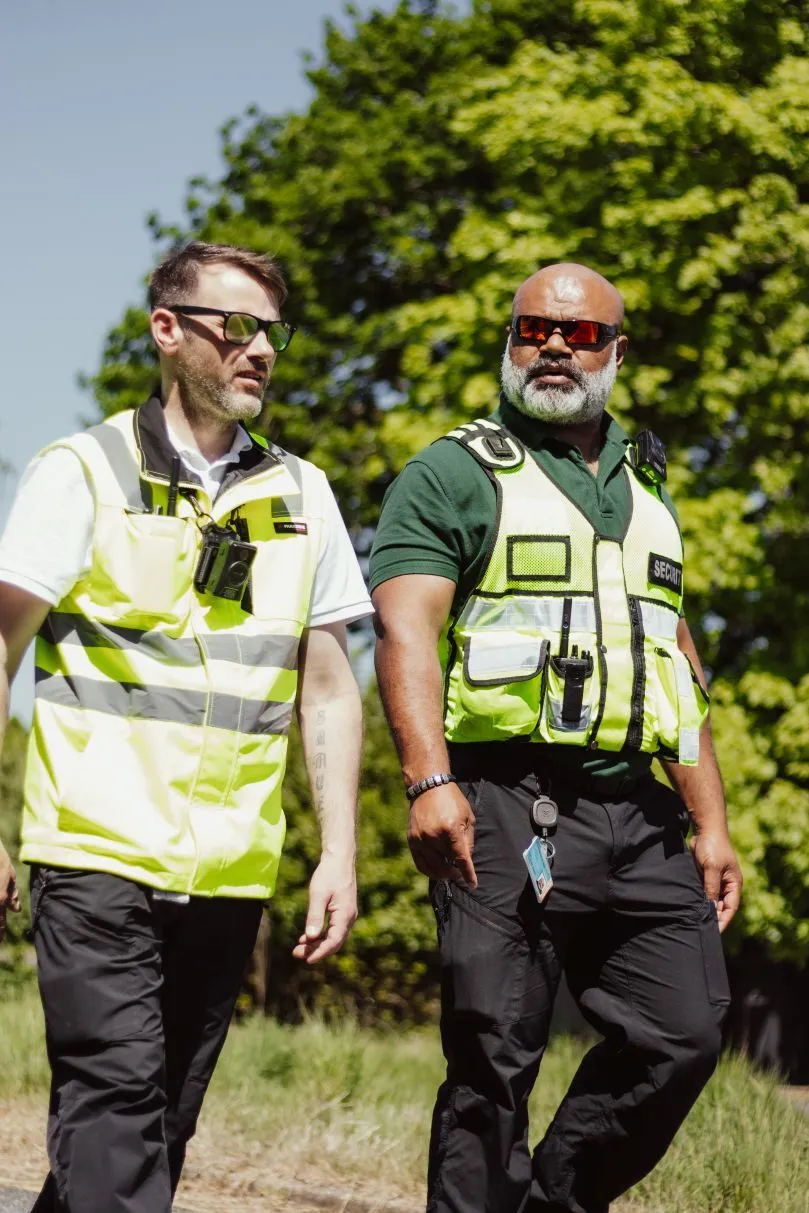
- Uniformed security guards: Visible deterrence, customer reassurance, and managed responses to incidents.
- Store detectives (plain-clothes): Covert observation, targeted evidence gathering, and support for prosecution-ready case files.
- Supervision and mobile support: Shift oversight, welfare checks, and consistent standards across sites.
If you are exploring guard-led options, see manned guarding and security patrol contractors from Lead Element Security.
Store Detective Vs Uniformed Guard: What’s The Difference?
- Primary purpose: A uniformed guard focuses on deterrence and visible control, while a store detective focuses on discreet detection and evidence.
- Best use cases: Uniform works well for antisocial behaviour and “walk-out” theft, while plain-clothes often suits repeat offending and ORC patterns.
- Customer experience: Both should be customer-friendly, but plain-clothes can reduce the feeling of a heavily “policed” environment.
Many retailers use a blended approach. For example, they use uniformed guards at peak times and a detective for targeted operations.
Patrols, Door Presence, Queue Management And Staff Support
Retail security personnel may also cover:
- Door presence and greetings: A simple, professional welcome can deter theft and set expectations.
- Queue management: Reducing flashpoints at tills, returns desks, or customer service.
- Support during refusals: Assisting staff with age-restricted refusals, intoxication concerns, or banned individuals.
- Back-Of-House checks: Monitoring stockroom access, delivery doors, fire exits, and high-risk blind spots.
2) Surveillance And Monitoring (CCTV)
CCTV for retail supports deterrence, real-time response, and evidence capture. A practical CCTV setup often includes:
- Coverage design: Cameras positioned for entrances, tills, high-value aisles, self-checkout, and stockroom entry points.
- Image quality: Suitable resolution and lighting to identify individuals and actions clearly.
- Operational monitoring: Live observation in higher-risk sites or during peak hours, plus fast export for police reports when needed.
- Maintenance routines: Regular checks, so critical cameras are not down during an incident.
CCTV should be supported by clear procedures. Staff should know who can access footage, how incidents are logged, and how evidence is preserved.
3) Access Control And Physical Security
Physical measures reduce opportunity and make suspicious behaviour easier to spot. Common elements include:
- Controlled staff entry: Key, fob, or code access for stockrooms and offices.
- Secure key management: Signed key logs, restricted duplication, and rapid escalation when keys go missing.
- Locks, shutters, and glazing: Suitable for the site’s risk and the value of goods displayed.
- Layout improvements: Reducing blind spots, improving sight lines, and positioning high-value stock sensibly.
For wider site support where the guard role blends into front-of-house management, concierge security can be a good fit in mixed-use retail environments.
4) Anti-Theft Systems (EAS Tags, Pedestals, Product Protection)
Electronic Article Surveillance (EAS) and product protection are staples of retail loss prevention. They can include:
- EAS tags and labels: Applied to high-risk products to trigger alarms if removed incorrectly.
- Pedestals (gates): Placed at exits to detect unpaid tagged items.
- Protective fixtures: Safer cases, hooks, stop-locks, bottle caps, and tethering for high-theft items.
- Process alignment: Tagging discipline, testing routines, and staff response steps when alarms activate.
5) Procedures: Incident Reporting, Evidence Capture And Case Building
Procedures turn “something happened” into an outcome you can act on. Strong retail security includes:
- Standard incident categories: Theft, aggression, criminal damage, trespass, safeguarding, and near misses.
- Evidence capture: Time stamps, camera references, witness details, and continuity notes.
- Escalation routes: When to call a manager, security supervisor, police, or medical support.
- Police-ready case files: Clear summaries, preserved footage, and consistent statements when required.
Where appropriate, security can also liaise with local policing teams and business partnerships. For practical prevention principles, see the Metropolitan Police crime prevention advice.
6) Staff Training: Awareness, De-Escalation And Lone Working
Even excellent security coverage can fail if staff do not know what to do. Training often includes:
- Awareness: Recognising concealment behaviour, distraction techniques, and repeat patterns.
- Conflict management: Verbal tactics to calm situations and avoid triggers.
- Lone working routines: Safety checks, agreed call-in times, and what to do if someone feels threatened.
- Opening and closing: Safe entry, secure cash handling, and consistent lock-up checks.
Lead Element Security can build these measures into a tailored plan through bespoke security, based on the realities of your site and trading patterns.
What Retail Security Guards Can And Can’t Do (UK)
SIA Licensing Basics And Why It Matters
In the UK, many front-line guarding activities require an SIA licence. Using properly licensed personnel supports professionalism, training standards, and accountability.
- What to check: The correct licence type for the role (for example, door supervision vs security guarding), and that it is in date.
- Why it matters: It reduces risk for retailers and helps ensure the guard has met baseline training and vetting expectations.
For official guidance, refer to the Security Industry Authority (SIA).
Detention, Citizen’s Arrest And Reasonable Force (High-Level Overview)
Retailers often ask what a guard can legally do. At a high level:
- Detention powers are limited: Security guards are not police, and site policy should be clear on when intervention is permitted.
- Citizen’s arrest may apply in specific situations: In some circumstances, members of the public can detain someone until police arrive, but the threshold and handling must be managed carefully.
- Any force must be reasonable and proportionate: The focus should always be on safety, de-escalation, and the least intrusive option.
Because the detail depends on your policies and the facts, ensure your provider works to clear assignment instructions, robust training, and a consistent escalation approach.
Compliance Essentials (CCTV, Privacy And Data)
GDPR And CCTV Signage: What Good Practice Looks Like
CCTV footage is usually personal data. Retailers should treat CCTV as part of their data protection responsibilities. Good practice typically includes:
- Clear signage: Visible notices explaining that CCTV is in use and who operates it.
- Lawful basis and purpose: Using CCTV for defined aims such as crime prevention and staff safety, not vague monitoring.
- Retention rules: Keeping footage only as long as necessary, with longer retention justified for higher-risk sites.
- Controlled access: Limiting who can view, export, or share footage, with an audit trail.
For authoritative guidance, see the Information Commissioner’s Office (ICO) UK GDPR guidance.
Retail Security Packages By Setting
Single High-Street Shop
A typical package might include:
- Part-time uniformed coverage: Peak hours, weekends, or late trading.
- Targeted CCTV coverage: Entrance, till, and high-value displays.
- Simple shrink routines: Tagging discipline, staff greetings, fitting room checks, and incident logs.
Supermarkets And Convenience Stores
These sites often need a blend of deterrence and safety support:
- Door presence: Especially during evenings, weekends, and high-traffic windows.
- Support at self-checkout: Reducing walk-offs and managing disputes.
- Violence reduction focus: Conflict management and safer refusals for alcohol, tobacco, or intoxicated customers.
Shopping Centres And Multi-Tenant Sites
Shopping centres often need a more structured operating model:
- Team-based patrols: Internal and external routes, car parks, and service corridors.
- Control room co-ordination: CCTV monitoring, radio networks, and incident prioritisation.
- Tenant support: Fast response to store calls and consistent reporting standards.
In some environments, a visible, community-focused approach can help reduce antisocial behaviour. Learn more about community security options with Lead Element Security.
Warehousing, Deliveries And Stockroom Controls
Many retail losses happen where customers never go. Strong packages include:
- Delivery checks: Matching paperwork to goods received and recording exceptions.
- Controlled access: Restricted stockroom entry, visitor logs, and secure cages for high-value items.
- Out-of-hours patrols: Protecting loading bays, rear doors, and waste areas that attract trespass.
How To Choose The Right Retail Security Solution
Start With A Risk Assessment (Threats, Layout, Peak Times)
A practical risk assessment should consider:
- Threat profile: Theft type, repeat offenders, aggression triggers, and previous incidents.
- Layout: Sight lines, blind spots, entrance and exit flow, and high-value zones.
- Trading patterns: Peak times, lone working periods, and late-night risks.
Lead Element Security can support this approach through its broader security services. This helps align people, procedures, and technology, rather than pushing a one-size-fits-all solution.
KPIs To Agree: Shrink Reduction, Incident Response Times, Reporting Quality
To avoid vague promises, agree measurable outcomes such as:
- Incident response time: Time from call to attendance on the shop floor.
- Reporting quality: Completeness, consistency, and usefulness of reports for investigations.
- Repeat incident reduction: Fewer repeated problems in the same zones or time windows.
- Staff confidence: Feedback on safety, support, and clarity of escalation.
Questions To Ask A Security Provider (Vetting, Training, Supervision)
- Licensing and vetting: How do you verify SIA status and suitability for retail work?
- Retail-specific training: Do guards receive conflict management and customer-facing training?
- Supervision: How are standards maintained across shifts and sites?
- Assignment instructions: Do you provide site-specific instructions that cover legal and policy boundaries?
- Reporting: What does a good incident report look like, and how quickly is it delivered?
To see how Lead Element Security approaches real-world deployments, you can browse case studies and learn more about Lead Element Security.
Cost Drivers: What Affects Retail Security Pricing?
Hours/Coverage, Store Size, Location, And Risk Profile
Retail security costs are usually influenced by:
- Coverage hours: Daytime only vs evenings, weekends, and late trading.
- Risk level: History of theft, aggression, or repeat offending.
- Store size and complexity: Multiple entrances, large footprints, or separate stockrooms.
- Location factors: Footfall, transport hubs, and local incident patterns.
Technology Vs Manpower: Getting The Balance Right
The best value usually comes from balancing deterrence, detection, and safe response.
| Approach | Where It Works Well | Common Gaps To Watch |
|---|---|---|
| Mostly CCTV And EAS | Low to medium risk sites, strong staff routines, clear sight lines | Limited real-time intervention, higher risk to staff during confrontation |
| Guard-Led Deterrence | High footfall, antisocial behaviour hotspots, repeat offenders | Costs rise with hours, still needs CCTV and reporting discipline |
| Blended Model (Guards + CCTV + Procedures) | Most supermarkets, busy high-street sites, shopping centre tenants | Requires strong management, clear KPIs, and consistent training |
Retail Security Checklist (Quick Self-Audit)
- Entrance Control: Staff greetings, clear visibility, working EAS gates, and a defined response to alarms.
- High-Risk Zones: High-value items positioned with good sight lines and sensible product protection.
- CCTV Readiness: Cameras cover entrances and tills, signage is clear, and exports are controlled and auditable.
- Opening And Closing: Two-person closing where needed, consistent lock-up checks, and safe keyholding.
- Cash Controls: Drops, floats, and end-of-day routines are documented and followed.
- Incident Reporting: Incidents logged consistently, with times, descriptions, and camera references.
- Staff Confidence: Teams know escalation routes and have basic de-escalation training.
- Provider Oversight: Guard supervision, site instructions, and KPIs are agreed and reviewed.
FAQs
Do I Need Security Guards Or Is CCTV Enough?
It depends on risk. CCTV is excellent for deterrence and evidence, but it cannot manage aggression, refusals, or urgent incidents in real time. If your site has repeat theft, antisocial behaviour, or staff safety concerns, a blended model is often more effective.
How Do I Reduce Shoplifting Without Upsetting Genuine Customers?
Focus on friendly, consistent controls:
- Customer-first engagement: Greeting at the door and visible staff presence in high-risk aisles.
- Smart layout: Reduce blind spots and keep high-value items within natural lines of sight.
- Proportionate protection: Tag or protect the products most frequently targeted, rather than everything.
When security is professional and polite, most genuine customers feel reassured, not challenged.
How Long Should CCTV Footage Be Kept?
There is no single fixed period for every retailer. A common approach is to keep footage only as long as necessary for the purpose, with retention set by risk and justified in policy. The ICO recommends aligning retention to purpose and avoiding “just in case” storage.
What Should An Incident Report Include?
- Who, what, when, where: Names (or descriptions), exact times, and specific locations in-store.
- What happened: A clear, factual narrative, avoiding speculation.
- Actions taken: De-escalation steps, any detention, police contact, first aid, or safeguarding actions.
- Evidence references: CCTV camera numbers, time stamps, photos where policy allows, and witness details.
An Example Retail Security Plan (Anonymised)
Scenario: A convenience retailer experienced repeat “grab-and-run” thefts during evening peaks, plus rising verbal abuse towards lone workers.
- Measures introduced: Visible uniformed presence at peak hours, refreshed incident reporting, improved CCTV coverage at the entrance and high-value bays, and staff de-escalation guidance.
- Operational change: Clear escalation routes and consistent logging, including camera and time references for faster evidence retrieval.
- Outcome tracked: Improved response consistency, better quality reports for repeat offenders, and fewer repeated incidents in the same time window.
If you want help shaping a similar plan, speak to Lead Element Security via contact us.
Fun Fact: Where “Shoplifter” Came From
The word “shoplifter” entered common usage in the 18th century as large urban shops expanded. Retail security has evolved ever since, from simple floor-walking to today’s blend of trained personnel, analytics, and privacy-regulated CCTV.
Conclusion
Retail security includes far more than having a guard or installing cameras. The strongest approach combines trained people, clear procedures, and fit-for-purpose technology, tailored to your site’s risks, layout, and peak trading times.
If you would like a practical, UK-focused retail security plan built around measurable KPIs and safer outcomes for staff and customers, explore Lead Element Security’s services or get in touch through contact us.
For further context on retail crime and prevention, you may also find resources from the British Retail Consortium (BRC) helpful.