

![How can retail businesses reduce theft and anti social behaviour [city]](https://leadelementsecurity.co.uk/wp-content/uploads/2026/06/How-can-retail-businesses-reduce-theft-and-anti-social-behaviour-1024x683.webp "How can retail businesses reduce theft and anti-social behaviour | Lead Element Security Group Ltd")
Table of Contents
- Why Theft And Anti-Social Behaviour Happen In Retail (And What To Focus On First)
- Start With A Simple Retail Security Risk Assessment
- Store Layout And Environmental Design That Deters Offending
- Technology That Reduces Theft (What Works And When To Use It)
- People And Processes: The Biggest Lever For Reducing Incidents
- When Security Guards Help Most (And How To Deploy Them Effectively)
- Working With Police, Local Councils And Business Crime Partnerships
- Legal And Compliance Essentials (UK)
- How To Measure Success And Prove ROI
- Retail Theft & Anti-Social Behaviour Checklist (Quick Wins In 30 Days)
- When To Get Professional Help
- Fun Fact: Small Friction Changes Can Cut Opportunistic Theft
- Conclusion
Direct Answer Summary: Retail businesses reduce theft and anti-social behaviour by combining smart store design, visible deterrents (CCTV signage and good lighting), staff training in conflict management, consistent policies for challenging and refusing service, and targeted security measures such as EAS tagging, patrols, and SIA-licensed guarding. Record incidents, share intelligence locally, and work with police and business crime partnerships.
Theft and anti-social behaviour can feel relentless, especially when the same offenders return. It also takes a toll when staff start to dread certain shifts. The good news is that the most effective retail security improvements are usually practical, measurable, and achievable without turning your shop into a fortress.
If you want the fastest route to results, focus on:
- Reducing opportunity: Tighten layout, sightlines, and “easy grabs”.
- Increasing perceived risk: Use clear CCTV signage, visible staff presence, and targeted guarding.
- Improving consistency: Set simple rules that every colleague follows, every time.
- Capturing better evidence: Log incidents with timestamps and descriptions police can use.
Why Theft And Anti-Social Behaviour Happen In Retail (And What To Focus On First)
Most retail crime is driven by opportunity, a low perceived risk of being challenged, and predictable store routines. Anti-social behaviour often escalates when boundaries are unclear, colleagues feel unsupported, or there is no consistent response to abuse.
Common Retail Threats: Shoplifting, Repeat Offenders, Abuse Towards Staff, Vandalism, Youth Disorder
- Opportunistic shoplifting: Quick concealment, “push-out” exits, and distraction thefts.
- Repeat offenders: People who test staff confidence and store routines.
- Abuse and intimidation: Verbal aggression at tills, during refusals, or around alcohol and age-restricted sales.
- Vandalism and nuisance: Damage, littering, and disruptive behaviour that drives customers away.
- Internal theft and fraud: Refund abuse, “sweethearting” at tills, and stockroom shrink.
Industry reporting consistently highlights how violence and abuse affect colleagues and trading conditions. For wider context on retail crime trends and workforce impact, see the British Retail Consortium (BRC).
Risk Factors: Layout, Blind Spots, Staffing Levels, High-Value Lines, Peak Times
- Poor sightlines: Tall fixtures, promotional dumps, and clutter that create concealment zones.
- Understaffed periods: Opening, late evenings, and busy peaks where attention is split.
- High-theft categories: Alcohol, meat, razors, cosmetics, medicines, and small electronics.
- Predictable routines: The same delivery process, cashing-up rhythm, and colleague positioning each day.
Start With A Simple Retail Security Risk Assessment
Before you buy new tech, get a clear baseline of what is happening and where. A short, repeatable risk assessment helps you prioritise controls that cut incidents with minimal disruption to customers.
Hotspot Mapping: Where Incidents Occur And When
Use two to four weeks of information, even if it is imperfect, and map it:
- Where: Aisle, bay, entrance, self-checkout, stockroom, toilets, car park edge.
- When: Day of week, hour of day, paydays, school finish times.
- What: Items targeted, behaviours used, and how the offender exited.
- Who: Lone offender, group, known repeat offender, or suspected internal involvement.
Tip: If you have CCTV, bookmark the camera views that cover hotspots. Review those views more often instead of trying to watch everything.
Prioritising Controls: Highest Impact, Lowest Disruption
A useful order of operations is:
- Fix visibility first: Improve sightlines, lighting, and colleague positioning.
- Remove the “easy wins” for offenders: Adjust high-risk product placement and manage open exits.
- Standardise staff responses: Use scripts, clear escalation routes, and consistent incident logging.
- Add targeted security: Use EAS tagging, body-worn video, or SIA-licensed guards where the risk justifies it.
Store Layout And Environmental Design That Deters Offending
Crime Prevention Through Environmental Design (CPTED) is a simple idea. Reduce hiding places, increase natural surveillance, and make it clear that your store is actively managed.
Improve Sightlines, Reduce Blind Spots, Manage Entrances/Exits
- Lower or re-orient fixtures: Keep key lines of sight from the till to high-risk areas.
- Create “zones” with ownership: Assign colleagues to visible areas instead of having everyone “floating”.
- Control the exit path: Where possible, make routes to the door pass staffed points.
- Use clear entry greetings: A simple hello increases perceived risk and supports capable guardianship.
Lighting, Mirrors, Product Placement And Queue Management
- Upgrade lighting in risk areas: Bright, even lighting reduces concealment opportunities.
- Add convex mirrors: Use them to cover corners, not as a replacement for staff presence.
- Move high-theft items to high-visibility zones: Place them near staffed positions, not in deep corners.
- Manage queues: Long waits and crowding increase frustration and can trigger abuse towards staff.
Use ‘Capable Guardianship’: Staff Presence And Customer Service As Deterrents
“Capable guardianship” means an engaged person is present and paying attention. You can build it into normal service without confrontation:
- Acknowledge customers early: Greet them and offer help in high-risk aisles.
- Stay visible: Avoid long periods in back rooms during higher-risk times.
- Use purposeful movement: Walk the same hotspot loop at set intervals.
Technology That Reduces Theft (What Works And When To Use It)
Technology works best when you plan it around your hotspots and back it with a clear process. A common mistake is installing CCTV, then finding it does not capture faces, actions, or exits clearly enough to support enforcement.
CCTV: Coverage Planning, Signage, Monitoring And Evidence Capture
Effective CCTV for retail theft prevention usually includes:
- Coverage planning: Cameras that capture entry, exits, self-checkouts, and high-risk aisles at usable angles.
- Facial-quality at entry: A dedicated doorway camera for identification.
- Signage: Clear signs that CCTV is in operation and who controls the system.
- Active monitoring: A defined role for in-store supervision, a guard, or remote monitoring.
- Evidential export: A quick way to download clips with timestamps and preserve continuity.
For policing-aligned good practice and evidence-led approaches, refer to the College of Policing. For legal text relevant to data protection duties, see legislation.gov.uk.
EAS Tags, RFID And Safer Displays For High-Theft Items
- EAS tagging: Best for high-volume theft lines where you need a strong visible deterrent.
- Source tagging: Reduces staff workload and improves consistency.
- Locked displays: Suitable for small, high-value items, but balance it against customer experience.
- RFID: Useful when you want better stock accuracy and faster discrepancy detection.
Practical rule: Tag items that are both high risk and easy to conceal. Do not waste time tagging low-risk bulky products.
Body-Worn Video, Panic Buttons And Monitored Alarms
- Body-worn video (BWV): Helps deter abuse and supports evidence capture during aggressive incidents.
- Panic buttons: Give staff a discreet way to summon support without escalating the situation.
- Monitored alarms: Work well for out-of-hours risk and can support quicker response when integrated properly.
BWV and panic alarms are particularly useful where abuse is frequent, staff are young or inexperienced, or there are lone-worker periods.
Access Control, Stockroom Security And Delivery Controls
Internal shrink is often overlooked. Simple controls reduce both mistakes and misconduct:
- Stockroom access: Restrict access to authorised colleagues only.
- High-value cages: Store high-risk lines in lockable areas with sign-out processes.
- Delivery checks: Separate “received” from “checked” stock, and record discrepancies immediately.
- Waste controls: Log write-offs and require sign-off to prevent “dumpster diversion”.
People And Processes: The Biggest Lever For Reducing Incidents
Retail theft prevention works best when colleagues feel confident, supported, and consistent. Clear processes also protect staff by setting safe boundaries.
Staff Training: Spotting Suspicious Behaviours And Safe Challenging
Train to behaviours, not stereotypes. Useful indicators include:
- Unusual scanning: Repeatedly checking cameras, staff positions, or exits.
- High concealment behaviour: Oversized bags, layered clothing, or “shielding” with prams.
- Distraction tactics: One person engages staff while another targets stock.
Keep challenging safe and non-physical:
- Service-first approach: “Hi, can I help you find anything?” delivered calmly and confidently.
- Two-person rule: If you must challenge, do it with a colleague present and keep your distance.
- Exit safety: Do not block exits or physically restrain anyone unless you are trained and authorised to do so.
De-Escalation And Conflict Management For Anti-Social Behaviour
Anti-social behaviour in shops often escalates at refusal points. Give staff a simple script and a clear escalation path:
- Stay calm and brief: Use short sentences and avoid debate.
- Set boundaries: “I want to help, but I cannot while you are shouting.”
- Offer options: “We can continue if you lower your voice, or you can leave and return later.”
- Exit and isolate: Move colleagues away from the aggressor and protect the till area.
If there is a risk of harm, prioritise staff safety, withdraw, and call the police as appropriate.
Clear Policies: Refusal Of Service, Banning, Trespass And Escalation Routes
Policies reduce hesitation and inconsistency. Your policy pack should define:
- Refusal triggers: Abuse, intoxication, theft suspicion, and threats.
- Banning process: Who can issue a ban, how it is recorded, and how staff are briefed.
- Escalation route: When to call a supervisor, security, centre management, or the police.
- Evidence standard: What CCTV clips and incident notes must include.
Where relevant, anti-social behaviour tools and enforcement powers can stem from legislation such as the Anti-social Behaviour, Crime and Policing Act 2014.
Cash Handling, Refunds/Returns Controls And Internal Theft Prevention
To reduce internal shrink and refund fraud:
- Segregate duties: Separate approval from processing for refunds above a threshold.
- Receipt checks: Require proof of purchase, and record no-receipt returns with ID where your policy permits.
- Exception reporting: Review high refund frequency, voids, and unusual discounts by colleague.
- Cash discipline: Use regular safe drops, dual counts, and documented variances.
When Security Guards Help Most (And How To Deploy Them Effectively)
Guards are most effective when you deploy them to specific risks, at specific times, with clear responsibilities. They should complement, not replace, strong store processes.
SIA-Licensed Presence: Deterrence, Customer Reassurance And Incident Response
- Visible deterrence: A professional presence at entrances or hotspots changes offender decision-making.
- Faster intervention: Guards can manage challenging behaviour earlier, before it escalates.
- Customer reassurance: Especially important where intimidation has become normal.
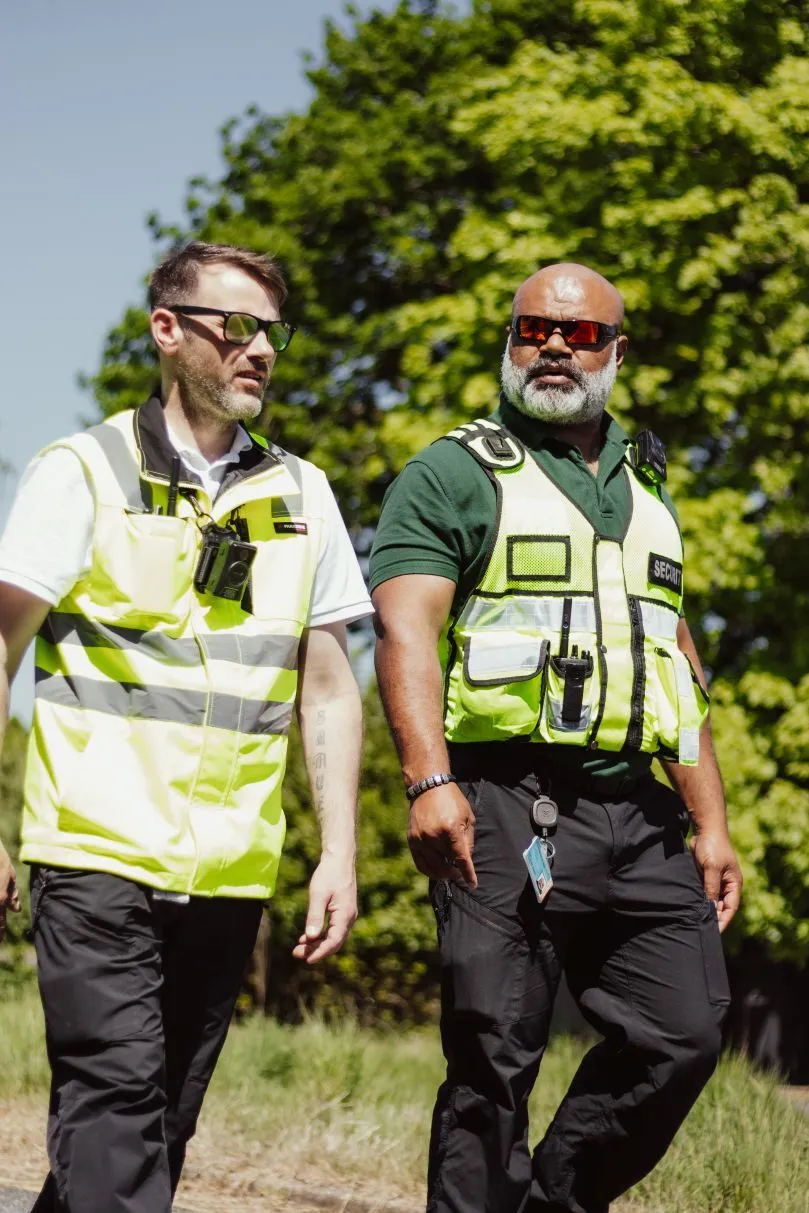
If you are considering manned guarding, Lead Element Security can advise on roles, post orders, and the right coverage pattern. Explore options via manned guarding and security services.
Patrol Patterns, Peak-Time Coverage And Lone-Worker Support
- Peak coverage: Match guard hours to incident peaks, not only standard trading hours.
- Unpredictable patrol loops: Avoid routines that offenders can time.
- Lone-worker protection: Support opening and closing, cash movements, and late shifts.
For multi-site retail parks or wider areas, consider security patrol contractors to increase visibility across multiple locations.
Working With Store Teams: Roles, Boundaries And Communication
Good deployments are built on clarity:
- Clear boundaries: Decide who challenges, who monitors, and who calls the police.
- Radio discipline: Use simple codes for suspicious behaviour and escalation.
- Daily brief and debrief: Share repeat offender descriptions and hotspot changes.
Working With Police, Local Councils And Business Crime Partnerships
Repeat offenders often affect multiple shops. Coordinated reporting and intelligence sharing improves outcomes and reduces “store hopping”.
Reporting Incidents Properly: What To Capture For Stronger Outcomes
Better reports increase the chance of action. Capture:
- Exact time and date: Match incident notes to CCTV timestamps.
- Description: Clothing, distinguishing features, speech, and direction of travel.
- What happened: Items taken, threats made, and any weapons mentioned.
- Evidence: CCTV clip reference, still images, and witness names.
For practical guidance on reporting and business support routes, start at GOV.UK and follow your local police force reporting process.
Information Sharing And Repeat-Offender Management
- Join local business crime reduction partnerships: Share verified descriptions and patterns.
- Use banned lists responsibly: Keep them accurate, current, and accessible to the team.
- Coordinate exclusions: Where lawful and appropriate, aligned banning reduces repeat visits.
Legal And Compliance Essentials (UK)
This section is not legal advice, but it will help you avoid common compliance pitfalls. These issues can undermine enforcement and expose your business to complaints.
CCTV And GDPR Basics: Signage, Retention And Access Requests
- Clear signage: State CCTV is in operation, the purpose, and who controls the data.
- Retention limits: Keep footage for a defined period, based on purpose, then delete it securely.
- Access requests: Use a clear process for data subject access requests within required timeframes.
- Secure storage: Restrict access to footage and log exports to protect evidential integrity.
For the underlying legal framework, refer to data protection legislation via legislation.gov.uk.
Reasonable Force, Citizen’s Arrest And Staff Safety Boundaries
Retail teams should prioritise safety. Policies should state clearly what staff must not do. If you detain a suspect, you need training and a lawful basis.
“Reasonable force” can apply in limited circumstances, and the law is fact-specific. For primary legislation often referenced in use-of-force contexts, see Section 3 of the Criminal Law Act 1967.
- Safety first: If there is aggression, withdraw and call for help.
- No heroics: Stock is replaceable, colleagues are not.
- Preserve evidence: Protect CCTV exports and incident notes.
Anti-Social Behaviour Tools And Banning Approaches (Where Relevant)
Banning approaches work best when they are:
- Consistent: Issued by authorised managers with clear documentation.
- Evidence-led: Supported by incident logs and relevant CCTV clips.
- Collaborative: Coordinated with centres, neighbouring retailers, and partnerships where appropriate.
How To Measure Success And Prove ROI
If you cannot measure it, it is hard to defend budget for it. Set a baseline, make changes, and review results monthly.
KPIs: Shrinkage, Incidents, Repeat Offenders, Staff Injury/Absence, Customer Feedback
- Shrinkage rate: Compare like-for-like periods and consider seasonal variation.
- Incident volume: Track theft, threats, abuse, and criminal damage separately.
- Repeat offender frequency: Count return visits and whether bans are working.
- Staff wellbeing: Monitor sickness, turnover, and reported stress linked to abusive incidents.
- Customer sentiment: Track complaints, reviews mentioning safety, and queue-related frustration.
Testing Changes: Before/After Comparisons And Seasonal Adjustments
- Change one thing at a time: For example, move high-risk items first, then add EAS tags.
- Use comparable weeks: Avoid comparing Christmas week to February trading.
- Record operational impacts: Note any increase in staff workload, queue times, or complaints.
For broader UK statistical context on crime measurement and trends, you can explore the Office for National Statistics (ONS).
Retail Theft & Anti-Social Behaviour Checklist (Quick Wins In 30 Days)
Use this as a practical sprint plan. Assign an owner to each action and set an internal review date.
Low-Cost Actions
- Move high-theft items to visible zones: Place them nearer tills and staffed areas.
- Declutter hotspots: Remove floor stacks that create concealment and block sightlines.
- Standardise greetings at entry: Make them consistent, friendly, and universal.
- Create a simple incident log: Record all theft and abuse, not only major events.
- Introduce refusal and abuse scripts: Give staff the words to use under pressure.
Medium-Cost Actions
- Improve lighting: Upgrade risk areas and entrances for better visibility.
- Add convex mirrors where needed: Cover corners you cannot manage through layout alone.
- Start EAS tagging on your top 20 lines: Target the items you lose most often.
- Add panic buttons: Support staff during refusal points and aggressive incidents.
Higher-Investment Actions
- Redesign CCTV coverage: Add an entry facial view and improve hotspot angles.
- Deploy body-worn video: Reduce abuse and strengthen evidence capture.
- Use SIA-licensed guarding at peak risk: Cover the hours where incidents cluster.
- Upgrade stockroom security: Add access control, cages, and structured delivery checks.
When To Get Professional Help
Consider bringing in specialist support if:
- Incidents are escalating: More threats, more violence, or weapons are being mentioned.
- Staff feel unsafe: Increased sickness, resignations, or refusal to work certain shifts.
- Losses are persistent: You have tried basic layout and process changes without results.
- You need evidential support: CCTV is not fit for purpose, or incident logs are inconsistent.
Lead Element Security supports retailers with practical, risk-led solutions, from visible patrols to full manned guarding and bespoke site plans. You can learn more about our approach on About Us, review outcomes on Case Studies, or explore bespoke security for complex sites.
What We See On The Ground: The fastest improvements usually come from combining one layout fix, one staff process fix, and one targeted deterrent. For example, relocate a high-theft display to a visible zone, introduce a consistent entry greeting, and add peak-time guarding. Together, these changes reduce opportunity and increase perceived risk.
If you would like a tailored retail security risk assessment and a practical 30-day plan, speak to Lead Element Security via Contact Us.
Fun Fact: Small Friction Changes Can Cut Opportunistic Theft
Many retail thefts are opportunistic rather than planned. Small “friction” changes, such as moving high-risk items into view, greeting at entry, and reducing blind spots, can cut incidents because most offenders avoid confrontation and surveillance cues.
Conclusion
To reduce shoplifting and anti-social behaviour, combine opportunity reduction (layout and product placement), perceived risk (visible deterrents and targeted guarding), and consistent people-led processes (training, scripts, escalation, and incident reporting). Start with hotspot mapping, fix the easiest vulnerabilities first, then invest in technology and coverage where your data shows it will have the biggest impact.
For ongoing support, resources, and updates, visit the Lead Element Security blog or explore Lead Element Security for retail-focused security services.