
Table of Contents
- What Is Construction Site Security?
- What Construction Site Security Includes (Core Components)
- What’s Different By Build Stage (Enabling Works, Shell, Fit-Out And Handover)
- Compliance And Good Practice In The UK
- How To Choose The Right Mix Of Security Measures
- What Affects Construction Site Security Costs?
- Construction Site Security Checklist (Download-Style Section)
- FAQs
- Fun Fact: Why “Transition Windows” Are A Favourite For Thieves
- Conclusion
Construction site security typically includes a risk assessment, controlled access, perimeter protection, SIA-licensed guards and/or mobile patrols, CCTV (often monitored), intruder alarms, lighting, visitor and vehicle logging, key and asset control, and incident reporting. The right mix depends on your site size, location, build stage, and the value of materials, plant, and tools on site.
Whether you are managing a small refurbishment or a multi-phase development, good security is not only about stopping theft. It is also about keeping people safe, protecting schedules, supporting insurance requirements, and showing due diligence if an incident occurs.
This guide explains what construction site security usually includes in the UK, how it changes from groundworks to fit-out, and what a professional provider should deliver as standard.
What Is Construction Site Security?
Construction site security is the combination of people, processes, and technology used to prevent, detect, delay, and respond to risks on a live building site. These risks include theft, vandalism, trespass, arson, and unauthorised access.
- Deterrence: Making the site look and feel difficult to target, using visible guards, lighting, signage, and well-managed access.
- Detection: Spotting issues early, using CCTV, alarms, patrols, and check-in procedures.
- Delay: Slowing intruders down, using hoarding, secure gates, anti-lift fixings, lockable compounds, and tool stores.
- Response: Acting quickly, using trained guards, keyholding, alarm response, and clear escalation to site management and the police.
Strong construction site security services bring these four elements together, rather than relying on a single measure such as CCTV alone.
What Construction Site Security Includes (Core Components)
1) Site Risk Assessment And Security Plan
A professional service starts with a documented risk assessment and a practical site security plan. This should be reviewed and updated as the build progresses.
It should cover:
- Threats: Theft of tools, plant, and fuel, vandalism, arson, trespass, and hostile reconnaissance.
- Vulnerabilities: Weak perimeter lines, poor lighting, blind spots, uncontrolled deliveries, and shared access with neighbours.
- Likelihood And Impact: What is most likely on your site, and what would cause the biggest cost or delay.
- Controls: Guarding, CCTV, alarms, access control, key control, asset protection, and response procedures.
A good provider will also propose a security method statement that aligns with site rules. It should include contingencies for power or connectivity loss. For example, CCTV towers may need battery backup, plus clear actions if monitoring drops.
If you need a tailored plan, Lead Element Security can build a phased approach through bespoke security, so measures match your programme and changing risk profile.
2) Perimeter Security (Fencing, Hoarding, Gates And Signage)
Perimeter protection is your first line of defence. Construction site perimeter security commonly includes:
- Hoarding Or Fencing: Creating a clear, continuous boundary with minimal gaps.
- Secure Gates And Locking Points: Reducing tailgating and preventing out-of-hours vehicle access.
- Anti-Climb Considerations: Removing footholds, protecting corners, and checking nearby structures or scaffold access.
- Signage: Warning of CCTV, alarms, and controlled access, plus safety signage to support site rules.
Inspect and log your perimeter regularly, especially after high winds, major deliveries, or changes to temporary works. These changes can create new entry points.
3) Access Control (Visitors, Vehicles, Deliveries And ID Checks)
Many site incidents involve opportunistic access. Some people also try to blend in during busy periods. Access control typically includes:
- Controlled Entry Points: Keeping access to a small number of gates and doors so checks happen consistently.
- Visitor Sign-In Procedures: Capturing names, company, purpose, arrival and departure times, and host details.
- ID Checks And Badging: Verifying identity and issuing passes where appropriate.
- Vehicle Access Control: Recording vehicle details and driver ID, then directing vehicles to agreed routes.
- Delivery Management: Booking deliveries, checking purchase orders, and supervising high-risk drop-offs such as copper, tools, generators, and fixings.
Clear rules also reduce insider risk. This includes rules for contractors, delivery drivers, and subcontractors, plus controlled access to stores and compounds.
4) Manned Guarding (Static Guards, Gatehouse And Reception)
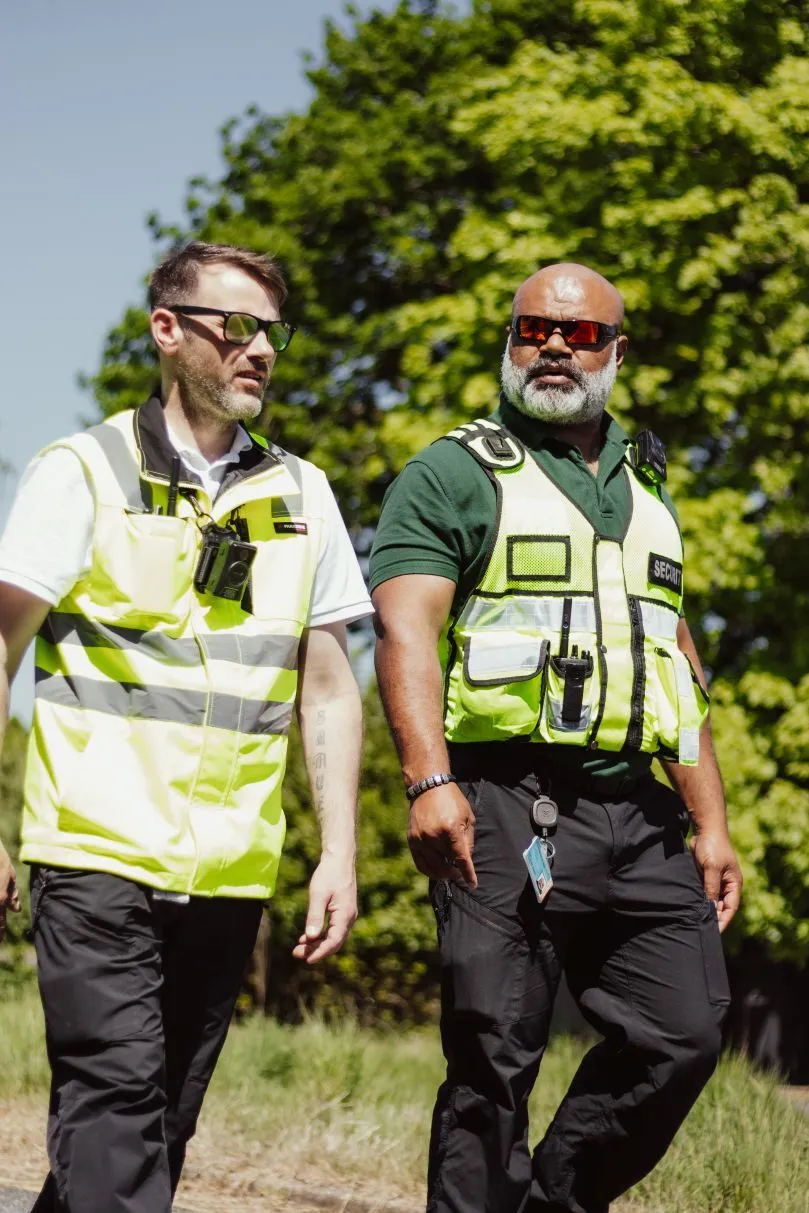
Manned guarding on construction sites often includes static security officers on gates, at a gatehouse, or patrolling defined zones. A robust guarding provision should include:
- SIA-Licensed And Vetted Officers: Confirmed licensing and screening, plus right to work checks.
- Site-Specific Assignment Instructions: Clear duties, escalation paths, and what good practice looks like for checks.
- Handover Procedures: Written handovers between shifts, including open issues and vulnerable areas.
- Professional Conduct And Communication: Radio procedure, conflict management, and consistent record keeping.
In the UK, security operatives carrying out licensable activities must meet Security Industry Authority requirements. You can check licensing guidance via the Security Industry Authority (SIA).
For dedicated coverage, explore manned guarding options from Lead Element Security.
5) Mobile Patrols And Lock/Unlock Services
Mobile security patrols are a cost-effective way to increase visibility and check known weak points. They can also strengthen out-of-hours protection. Typical inclusions are:
- Scheduled Or Random Patrol Visits: Reducing predictability and increasing deterrence.
- Lock And Unlock Routines: Confirming gates, stores, and cabins are secured at agreed times.
- Checkpoint Verification: Time-stamped patrol logs, sometimes supported by NFC tags or geo-verification.
- Immediate Escalation: Calling site contacts, the police, or alarm monitoring where required.
Patrols work well when sites are closed but still need a human layer to confirm alarms and check perimeters.
You can learn more about security patrol contractors from Lead Element Security.
6) CCTV And Remote Monitoring (Including Evidential Footage Handling)
Construction site CCTV has moved beyond basic recording. A complete CCTV package often includes:
- Temporary CCTV Towers Or Fixed Cameras: Positioned to cover entry routes, compounds, and high-value zones.
- Remote Monitoring: Trained operators who verify events and escalate quickly.
- Tamper Detection: Alerts if cameras are moved, obscured, or lose signal.
- Power And Connectivity Planning: Battery backups, secure cabling, and contingency plans for outages.
- Evidential Footage Handling: Secure storage, controlled access, and documented exports for the police or insurers.
CCTV works best when paired with lighting, clear sight lines, and controlled access. If your goal is prevention and fast response, do not treat CCTV as a standalone solution.
For UK GDPR compliance, follow the ICO’s UK GDPR guidance on CCTV. This includes appropriate signage, retention periods, and secure access to recordings.
7) Intruder Alarms, Sensors And Rapid Response
Intruder alarms and sensors add a strong detection layer, particularly for cabins, stores, and compounds. Construction site alarm coverage commonly includes:
- Door And Window Contacts: Triggering alerts if access points are forced.
- Motion Sensors: Detecting movement in cabins, storage containers, or defined zones.
- Perimeter Sensors (Where Suitable): Detection for specific high-risk boundaries.
- Monitored Signalling: Sending alerts to a monitoring centre for verification and action.
- Rapid Response Protocols: Pre-agreed steps, including guard response, keyholding, and police contact thresholds.
Define response expectations in writing. This should include who attends, the target time window, and what evidence they record on arrival.
8) Lighting, Visibility And Environmental Design To Deter Intruders
Lighting is one of the most effective deterrents when you implement it well. It supports CCTV quality, reduces hiding places, and makes intrusion feel high risk. Typical measures include:
- Well-Lit Access Points: Gates, turnstiles, doors, and delivery areas.
- Motion-Activated Lighting: Drawing attention to movement out of hours.
- Clear Sight Lines: Reducing visual clutter and screening around high-value storage.
- Secured By Design Thinking: Using layout and visibility to reduce opportunities for crime.
For protective security principles and risk-led deterrence ideas, the National Protective Security Authority (NPSA) provides useful guidance for organisations.
9) Asset, Key And Plant Protection (Tool Stores, Immobilisation, Tracking Support)
Construction theft is often about speed. Asset protection reduces how quickly offenders can take tools and plant, and how easy they are to sell on. Security provision often includes:
- Secure Compounds And Tool Stores: Hardened storage, controlled access, and routine checks.
- Key Control: Signed key issue logs, restricted access, and clear responsibility for plant keys.
- Plant Immobilisation Support: Policies and routines so plant is immobilised and parked in secure positions.
- Asset Registers: Recording serial numbers, ownership, and locations for faster recovery and insurance claims.
- Tracking Support: Supporting processes around trackers (where used) and escalation when alerts occur.
Simple steps can also reduce repeat losses. Examples include controlled tool sign-out and last-person checks for cabins and stores.
10) Incident Management, Reporting And Liaison With Police And Insurers
Professional security should leave a clear audit trail. Incident management typically includes:
- Daily Occurrence Logs: Time-stamped notes of patrols, checks, and any issues found.
- Incident Reports: What happened, where, when, who was involved, and actions taken.
- Photo Evidence: Images of damage, forced entry points, or unsafe conditions relevant to the incident.
- Escalation And Liaison: Coordinating with the police, site management, neighbours, and insurers where required.
- Evidence Preservation: Protecting CCTV footage, recording who accessed it, and documenting continuity.
Ask your provider what their reporting schedule looks like. Also ask what KPIs they track, such as response times, incident volumes, false alarms, and perimeter defects.
What’s Different By Build Stage (Enabling Works, Shell, Fit-Out And Handover)
Construction sites are not static, so the best security setup changes over time. Reassess risks and update controls as the project moves forward. Do not set it once and leave it unchanged.
Early Stage: Open Perimeters, Fuel Theft And Plant Risk
- Typical Risks: Trespass, plant theft, fuel siphoning, unauthorised parking, and fly-tipping.
- What Works Well: Clear fencing lines, controlled gate access, mobile patrols, lighting at entry points, plant key control, and secure parking arrangements.
- Priority Outcome: Deterrence and delay, because open sites are easier to access.
Mid Stage: Materials Theft, Unauthorised Access And Vandalism
- Typical Risks: Theft of materials, vandalism, metal theft, and opportunistic entry during delivery peaks.
- What Works Well: Gatehouse controls, visitor management, defined delivery windows, CCTV coverage of compounds, alarms on cabins and stores, and regular perimeter inspections.
- Priority Outcome: Strong detection, because site activity is high and offenders exploit busy periods.
Late Stage: High-Value Finishes, Copper Theft And Out-Of-Hours Access
- Typical Risks: Theft of fixtures and fittings, copper and cabling, targeted break-ins, and insider risk during multiple subcontractor phases.
- What Works Well: Tighter access control, stronger ID checks, CCTV with monitored response, internal zoning, asset registers for high-value items, and clear keyholding rules.
- Priority Outcome: Response and evidence, because losses can be high and schedules are sensitive.
Compliance And Good Practice In The UK
SIA Licensing, Vetting And Conduct
When you need security operatives, ensure they are SIA-licensed for the work they perform. Your provider should also be able to evidence vetting and screening, including ID checks, right to work checks, and screening appropriate to the role.
The SIA is the UK’s regulator for the private security industry. See official SIA guidance for details.
It is also sensible to ask whether guarding is delivered in line with recognised good practice such as BS 7499 (manned guarding). You should also ask how supervision and performance checks are carried out.
Health And Safety Interface (Site Rules, Inductions And RAMS)
Security teams must work with site health and safety, not alongside it. Expect:
- Site Inductions: Security officers following the same induction standards as other site workers where appropriate.
- RAMS Alignment: Guarding and patrol tasks reflected in risk assessments and method statements.
- Safe Access And Egress: Gate procedures that support safe vehicle and pedestrian movement.
- Near-Miss Reporting: Security reporting hazards found during patrols, such as damaged hoarding or unsafe access points.
For UK construction health and safety guidance, refer to the Health and Safety Executive (HSE) construction resources.
Data Protection And CCTV Signage (UK GDPR Considerations)
If you use CCTV, you need clear governance, not only cameras. Good practice includes:
- Clear Signage: Informing people that recording is taking place, and who controls the system.
- Lawful Basis And Purpose: Recording for security, safety, and incident investigation, with a defined purpose.
- Retention Rules: Keeping footage for a justified period, then deleting it securely.
- Access Control: Limiting who can view or export footage, supported by audit logs.
- Subject Rights Processes: Knowing how to handle requests appropriately.
The Information Commissioner’s Office (ICO) is the authoritative source for UK GDPR guidance.
How To Choose The Right Mix Of Security Measures
Key Factors: Location, Site Footprint, Working Hours And Asset Value
The best mix is risk-led. When planning, consider:
- Location And Neighbours: Urban sites often need tighter access control. Rural sites may need stronger perimeter deterrence and monitored detection.
- Footprint And Layout: More entry points and blind spots usually mean more cameras, better lighting, or more patrol coverage.
- Working Hours: The longer a site is empty, the more you rely on detection, delay, and response.
- Asset Profile: Plant, copper, tools, generators, and high-value finishes attract targeted theft.
- Resilience: Power and internet availability, plus what happens if either fails.
If you want to compare options, start with security services from Lead Element Security. Then narrow down to the blend of guarding, patrols, and technology that fits your programme.
Red Flags: Unclear Reporting, Poor Escalation, No Proof Of Licensing Or Insurance
Be cautious if a provider cannot clearly explain:
- Licensing And Vetting: Proof of SIA licensing and screening.
- Insurance: Public liability and employers’ liability, plus clear boundaries of responsibility.
- Reporting Outputs: What you will receive daily or weekly, and what evidence is captured.
- Escalation: Exactly when the police are called, and who is contacted first.
- Supervision: How officers are managed and how performance is checked.
To see how security delivery looks in practice, browse case studies from Lead Element Security.
What Affects Construction Site Security Costs?
Costs vary widely. Most budgets are driven by coverage hours, the level of monitoring and response, and how difficult the site is to secure.
Guarding Hours Vs Patrol Frequency Vs Monitored CCTV
- Static Guarding: Higher cost and higher presence. Best for busy or high-risk sites and controlled access points.
- Mobile Patrols: Lower cost than continuous guarding. Good for checks, lock-ups, and unpredictable deterrence.
- Monitored CCTV: Often cost-effective for detection, especially when paired with clear response procedures.
Set-Up Costs: Fencing, Cameras, Power And Connectivity
- Physical Works: Hoarding, gates, secure compounds, and lock upgrades.
- Equipment: Temporary CCTV towers, alarms, sensors, and signage.
- Utilities: Power provision, battery backups, and connectivity (4G/5G or wired).
- Site Changes: Repositioning cameras and lighting as the build evolves.
If you want an accurate quotation, Lead Element Security can start with a risk assessment and propose a phased package through construction site security support.
Construction Site Security Checklist (Download-Style Section)
Use this as a practical checklist when setting up site security, or when auditing an existing plan.
- Risk Assessment Completed: Threats, vulnerabilities, likelihood, impact, and controls documented and reviewed at each phase.
- Perimeter Checked Daily: Fencing, hoarding, gates, and locks inspected and defects logged.
- Entry Points Controlled: One main access point where possible, with ID checks and anti-tailgating procedures.
- Visitor And Vehicle Logs In Place: Names, companies, times, vehicle registrations, delivery details, and host sign-off.
- High-Value Assets Zoned: Copper, tools, and plant kept in secure areas with restricted access.
- Key Control Managed: Issue logs, restricted access, and clear responsibility for plant keys.
- CCTV Positioned For Evidence: Coverage of access routes and compounds, adequate lighting, and secure retention rules.
- Alarms And Sensors Tested: Regular checks, tamper alerts enabled, and monitoring contacts confirmed.
- Lock-Up Routine Defined: Timed checks for cabins, stores, gates, and high-risk points.
- Response Plan Agreed: Who attends, target times, police call thresholds, and how evidence is preserved.
- Reporting Delivered Consistently: Daily logs, incident reports, photo evidence, and weekly KPI review if required.
- Health And Safety Integrated: Inductions completed, site rules followed, and hazards reported during patrols.
Need help implementing this checklist on a live site? Speak to Lead Element Security via contact us for a site-specific plan.
FAQs
Do You Need Security On A Construction Site Overnight?
Often yes, especially if you store tools, plant, fuel, or high-value materials on site. Overnight security can include static guards, mobile patrols, monitored CCTV, alarms, or a mix. The right choice depends on your risk assessment, local environment, and the build stage.
Is CCTV Enough Without Guards?
CCTV can be effective for deterrence and detection, but it is rarely enough on its own. Without good lighting, controlled access, physical delay measures, and a clear response plan, cameras may only record a loss rather than prevent it. Many sites get the best results by combining monitored CCTV with patrols or keyholding response.
What Should A Security Company Provide In Its Reports?
As a minimum, reporting should include:
- Daily Occurrence Logs: Time-stamped patrol and check records.
- Incident Reports: A clear narrative, actions taken, and escalation details.
- Photo Evidence: Images of defects or damage where relevant.
- CCTV References: Camera IDs, timestamps, and export notes for evidential continuity.
- Recommendations: Practical fixes, such as moving a camera, repairing hoarding, or adjusting lock-up times.
How Quickly Should Response Happen After An Alarm?
This depends on the risk level and what response you have contracted. You should agree a target response time in writing. The key point is that an alarm should trigger a clear chain: verification (where possible), attendance, and a documented outcome.
Fun Fact: Why “Transition Windows” Are A Favourite For Thieves
Many thefts happen in minutes during quiet transition windows, such as shift change, delivery peaks, and just after sites close. Timed lock-up routines and well-lit access points can reduce opportunistic theft, because most offenders prefer low-risk, poorly observed entry routes.
Conclusion
Construction site security includes much more than a guard or a camera. The strongest approach combines deterrence, detection, delay, and response. It starts with a risk assessment and uses controlled access, strong perimeters, guarding or patrols, CCTV and alarms, lighting, asset control, and professional reporting.
If you want a UK-focused, build-stage security plan with clear reporting and accountable response, Lead Element Security can help. Explore construction site security, learn about us, or request a quote through contact us.