
Table of Contents
- What Security Do Office Buildings Need In The UK? (Quick Checklist)
- Start With A Security Risk Assessment (What To Evaluate)
- Physical Security Measures For Office Buildings
- Access Control And Visitor Management
- CCTV: What Good Looks Like In UK Offices
- Intruder Alarms, Sensors And Response
- Manned Guarding, Concierge And Mobile Patrols (What To Choose)
- Policies And Procedures That Strengthen Office Security
- UK Compliance And Standards To Consider
- How Much Does Office Building Security Cost In The UK?
- How To Choose A Security Provider (Practical Checklist)
- FAQ: Office Building Security In The UK
- Fun Fact: Tailgating Is Often The Biggest “Breach”
- Conclusion
UK office buildings typically need layered security: controlled access (fobs, turnstiles and visitor management), CCTV with clear signage and UK GDPR-compliant policies, intruder alarms with a monitored response, robust lighting and perimeter protection, plus trained on-site staff (concierge or guards) or mobile patrols. The right mix depends on your risk assessment, occupancy, location, and insurance requirements.
For office managers, landlords and facilities teams, the question is rarely “Do we need security?”. It is usually: “What is standard for UK offices, what is proportionate, and who is responsible in a multi-let building?” This guide breaks it down into practical measures you can implement, a checklist you can share internally, and the key UK compliance points (SIA licensing, UK GDPR for CCTV, and health and safety).
What Security Do Office Buildings Need In The UK? (Quick Checklist)
If you need a quick, actionable answer, use this checklist as your baseline. Then tailor it with a risk assessment (covered next).
- Access Control: Fobs or cards, secure reception, controlled lift access where needed.
- Visitor Management: Sign-in process, host responsibility, badges, and contractor controls.
- Anti-Tailgating Measures: Clear policies, reception sightlines, and physical barriers in higher-risk sites.
- CCTV: Coverage of entrances, reception, and key circulation routes, with UK GDPR-compliant signage and retention rules.
- Intruder Alarm: Door contacts and internal detection, with a defined response plan.
- Perimeter and Lighting: Good external lighting, secured doors, and protected ground-floor glazing.
- Security Staff Or Patrols: Concierge, manned guarding, or mobile patrols depending on risk and opening hours.
- Procedures: Incident reporting, handover logs, key control, and escalation plans.
- Compliance: SIA licensing (where applicable), UK GDPR for CCTV, and HSE-aligned risk assessments.
Baseline Security (Suitable For Most Small To Mid-Sized Offices)
- Reception Control: A visible reception point during business hours, even if it is shared or part-time.
- Fob Access To Office Floors: Door readers on main entry points and tenant demise doors.
- Simple Visitor Process: A sign-in book or basic visitor management system (VMS), plus visitor badges.
- Evidential CCTV: Recording-focused CCTV covering entry points and reception, with clear signage.
- Intruder Alarm Out Of Hours: A clear set-and-unset procedure, plus nominated keyholders.
- Basic Security Culture: “No tailgating” messaging, staff briefings, and lost-pass reporting.
Enhanced Security (High-Footfall, City Centres, Mixed-Use)
- Visitor Management System: Pre-registration, host notifications, and audit trails.
- Turnstiles or Speed Gates: A physical anti-tailgating layer at reception in busy buildings.
- Live Monitoring Options: Remote monitoring for CCTV and alarms, especially out of hours.
- Delivery and Contractor Controls: Defined routes, holding areas, and sign-in with authorisation checks.
- Concierge Security: Reception-led deterrence with trained staff who manage visitors, incidents, and access.
- Regular Patrols: Scheduled checks of stairwells, plant rooms, car parks, and perimeter doors.
High-Security Offices (Executives, Sensitive Data, Regulated Sectors)
- Zoning: Separate access levels for floors, suites, comms rooms, and executive areas.
- Stronger Credential Controls: Anti-passback, rapid deactivation, and formal joiner-mover-leaver processes.
- Enhanced Screening: Security staff vetting aligned with BS 7858 expectations where relevant.
- Formal Incident Management: Documented playbooks for lockdown, threats, suspicious packages, and evidence handling.
- Measured Performance: KPIs, audits, and trend reporting to show results.
Start With A Security Risk Assessment (What To Evaluate)
Security works best when it is risk-led, not gadget-led. A simple approach is to score likelihood and impact, then prioritise controls that reduce both. You can also align this with workplace safety risk assessment habits, as recommended by the Health and Safety Executive (HSE).
| Risk Item | Likelihood (1-5) | Impact (1-5) | Score (L x I) | Priority Action |
|---|---|---|---|---|
| Tailgating Into Reception | 4 | 4 | 16 | Add barriers, train staff, enforce badge rules |
| Out-Of-Hours Theft (Low Occupancy) | 3 | 4 | 12 | Improve lighting, alarm response, patrol frequency |
| Unauthorised Access To Plant Rooms | 2 | 5 | 10 | Lock upgrades, access logs, contractor permits |
Tip for multi-let buildings: Split the assessment into “base building” (landlord) and “tenant” (suite-level) risks. This helps you avoid gaps. For example, do not assume the landlord covers CCTV inside tenant floors. Likewise, do not assume tenants manage contractor access to shared risers.
Assets, Threats And Vulnerabilities (The UK Context)
- People: Staff, visitors, contractors, and lone workers.
- Property: Laptops, phones, prototypes, and high-value equipment.
- Information: Client data, regulated data, and intellectual property.
- Operations: Uptime for power, comms, plant, and building access systems.
Common UK office threats include theft, unauthorised access, antisocial behaviour, and opportunistic break-ins. Use location intelligence too, such as local crime patterns and trends from the Office for National Statistics (ONS) Crime and Justice hub.
Footfall, Visitor Patterns And Tailgating Risk
Tailgating is one of the most common failure points in office security because it looks normal. Busy receptions, delivery peaks, and hybrid working can all increase the risk. People may “hold the door” for the wrong person.
- Red Flags: Multiple tenants, shared reception, frequent couriers, hot-desking, and events.
- High-Gain Controls: Reception line of sight, visitor badges, barriers, and clear staff messaging.
Out-Of-Hours Exposure And Lone Working
Hybrid working can reduce daytime occupancy, but it can increase out-of-hours vulnerability. Fewer people means fewer natural witnesses. Criminals often target quieter buildings.
- Common Gaps: Unlocked side doors, poor car park lighting, and weak set-and-unset routines.
- Practical Fixes: Timed lock schedules, monitored alarms, and targeted patrols at higher risk times.
Physical Security Measures For Office Buildings
Physical security is your foundation. If doors, glazing, and critical rooms are easy to breach, cameras and guards become reactive.
Perimeter, Doors, Locks And Glazing (Target Hardening)
- External Doors: Use robust locks and self-closing mechanisms. Where appropriate, add alarms to deter misuse of emergency exits.
- Glazing: Protect vulnerable ground-floor glazing with suitable film or upgraded glass where the risk justifies it.
- Service Access: Secure loading bays and side entrances, as these are often the least supervised routes.
- Keys: Keep a key register, restrict master keys, and audit issue and return.
Lighting, Line Of Sight And Designing Out Crime
Good lighting and sightlines reduce hiding places and improve CCTV image quality. This aligns with “designing out crime” thinking and protective security good practice, including guidance from the National Protective Security Authority (NPSA).
- Lighting Priorities: Entrances, car parks, bin stores, bicycle storage, and paths to public transport.
- Landscaping: Keep shrubs low near entrances to protect visibility.
- Signage: Make it clear where visitors should go, and where access is restricted.
Secure Zones: Reception, Lifts, Stairwells And Plant Rooms
Think in zones rather than “the building is secure or insecure”. Zoning helps you avoid over-securing low-risk areas while tightening controls where they matter most.
- Reception: Create a controlled boundary between public and secure space.
- Lifts: Consider floor-restricted lift controls for multi-tenant buildings.
- Stairwells: Stop stairwells becoming uncontrolled routes between floors.
- Plant and Comms Rooms: Use strict access lists and keep access logs.
Access Control And Visitor Management
Access control should do two things: stop unauthorised access, and create an audit trail. That audit trail can help investigations and support insurance claims.
Fobs/Cards, PINs, Biometrics And Anti-Passback
- Fobs or Cards: The most common approach for UK offices, and easy to revoke when lost.
- PINs: Useful as a second factor, but manage shared-code risk carefully.
- Biometrics: Consider only where justified, and handle privacy lawfully and transparently.
- Anti-Passback: Helps prevent one credential being used to let multiple people in. It suits higher security areas.
Turnstiles, Intercoms And Delivery/Contractor Control
Deliveries and contractors often create the biggest real-world access gaps. Build a workflow that keeps operations moving without losing control.
- Deliveries: Use a delivery point or holding area, and require host confirmation for access beyond reception.
- Contractors: Verify identity, log arrival and departure, and define where they can go.
- Intercoms: Useful for out-of-hours access, but avoid casual “buzz-in” habits.
Policies That Reduce Tailgating And Lost-Pass Risk
- Badge Culture: Make it normal to wear and display ID in shared areas.
- Lost Credential Process: Immediate reporting, rapid deactivation, and documented reissue rules.
- Host Responsibility: Visitors stay with hosts, and staff challenge unattended visitors politely.
CCTV: What Good Looks Like In UK Offices
CCTV should support prevention, detection, and investigation. “Good” is not only having cameras. It means usable images, reliable storage, and lawful governance.
Camera Coverage Planning (Entrances, Reception, Car Parks)
- Entrances and Exits: Capture face-level images, not only the tops of heads.
- Reception: Cover the boundary between public and secure zones.
- Car Parks: Cover pedestrian routes, payment points, and entry and exit lanes where relevant.
- Critical Areas: Cover plant rooms, comms rooms, and loading bays where your risk assessment supports it.
Monitoring Options: Live Monitoring Vs Evidential Recording
- Evidential Recording: Suitable where incidents are infrequent and you need footage for police or insurers.
- Live Monitoring: Better for higher-risk buildings, out-of-hours periods, or where immediate intervention reduces loss.
- Hybrid Model: Live monitoring at high-risk times, plus recorded footage for investigations.
GDPR/ICO Compliance: Signage, Retention, Access Requests
In the UK, CCTV must comply with UK GDPR and the Data Protection Act. A clear starting point is the Information Commissioner’s Office (ICO) UK GDPR guidance.
- Define Your Role: Clarify who is the data controller in multi-let buildings. Often, the landlord covers common areas, and tenants cover their suites.
- Lawful Basis and Purpose: Record why CCTV is necessary and what it is meant to prevent or detect.
- Signage: Place clear signs at entrances and in monitored areas. Include who operates the system and how to contact them.
- Retention Period: Keep footage only as long as necessary, with a written rationale, then delete it securely.
- DPIA Where Needed: Complete a Data Protection Impact Assessment if surveillance is likely to be high risk to individuals.
- Subject Access Requests: Have a process to locate, review, and redact third parties where required.
- Processors: If you use a monitoring provider, define controller and processor responsibilities in the contract.
Intruder Alarms, Sensors And Response
Alarms work best when the response is clear, timed, and tested. An alarm that no one responds to is only noise.
Alarm Types (PIR, Door Contacts, Panic Alarms)
- Door And Window Contacts: Detect forced entry or unauthorised opening.
- PIR Sensors: Detect movement in key internal areas out of hours.
- Glass Break Sensors: Useful where glazing is a likely attack point.
- Panic Alarms: Useful for reception teams or staff facing higher personal risk.
Keyholding, Alarm Response And Escalation Plans
Define who responds, how quickly, and what happens next. A practical escalation ladder looks like this:
- Stage 1, Alarm Verification: Monitoring centre checks zones and any available CCTV for confirmation.
- Stage 2, Keyholder Dispatch: A trained keyholder attends within an agreed timeframe.
- Stage 3, On-Site Actions: Site is checked, incidents are logged, evidence is preserved, and police are contacted where needed.
- Stage 4, Management Notification: Facilities or the duty manager is informed, plus tenant notifications if relevant.
If you want one provider to manage response and reporting, explore security services from Lead Element Security, including tailored guarding and patrol options.
Manned Guarding, Concierge And Mobile Patrols (What To Choose)
People provide deterrence, judgement, and immediate action. The right model depends on footfall, reputation risk, incident history, and budget.
Concierge Security For Reception-Led Deterrence
Concierge security combines front-of-house service with security control. It works well where the main risk is unauthorised entry through reception.
- Best For: Multi-let offices, city-centre receptions, mixed-use buildings.
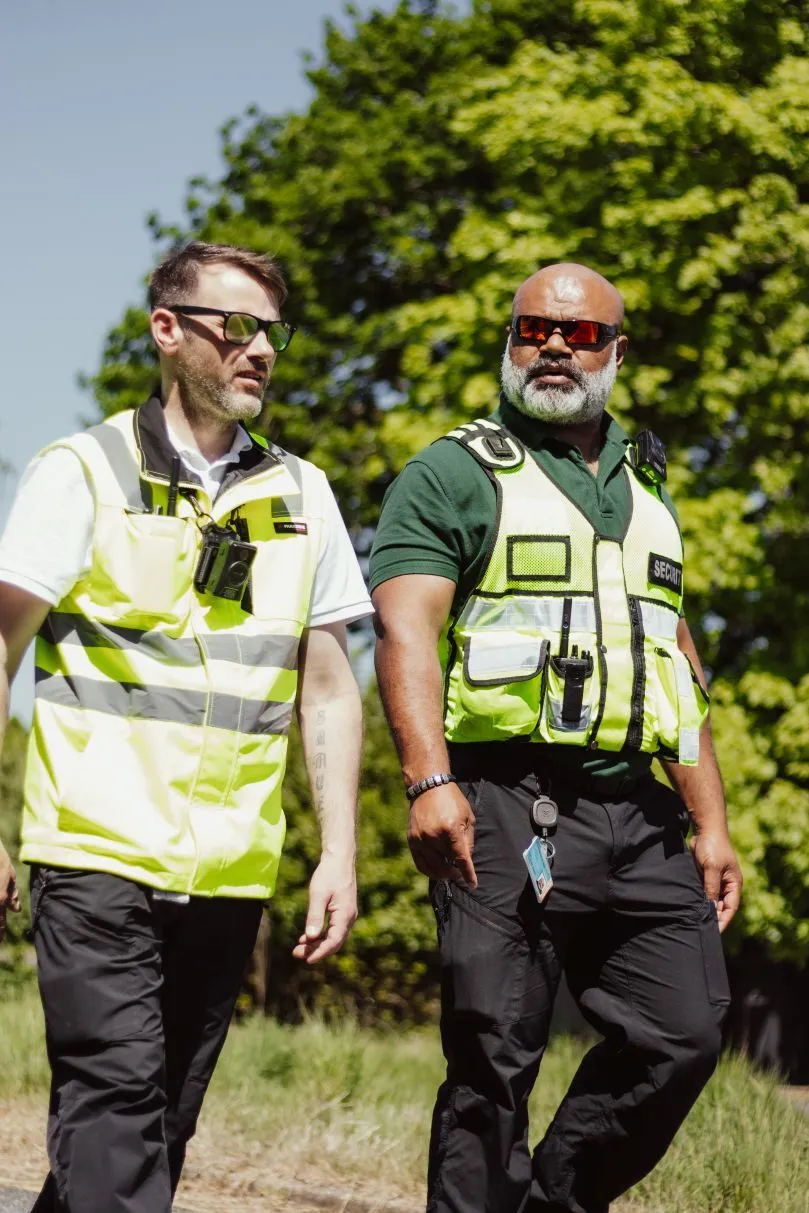
- Typical Duties: Visitor vetting, ID checks, access support, incident response, and contractor sign-in.
- Explore Options: Concierge security from Lead Element Security.
Static Guards Vs Patrols: Coverage, Cost And Outcomes
- Static Guarding: Best for constant presence at reception, strong deterrence, and immediate response.
- Mobile Patrols: Best for out-of-hours checks, multiple sites, or when incidents are occasional.
- Blended Approach: Reception concierge in hours, plus mobile security patrols overnight.
When you procure guarding, ask how the provider aligns with recognised expectations such as BS 7499 (security services management) and BS 7858 (screening of individuals working in a security environment). You do not need to be a standards expert. You should, however, expect clear vetting, training, and supervision.
SIA Licensing And Vetting Standards To Look For
In the UK, many security roles require Security Industry Authority licensing. You can check requirements and due diligence expectations via the Security Industry Authority (SIA) on GOV.UK.
- Licence Checks: Confirm the correct SIA licence type for the role being delivered.
- Vetting: Ask how officers are screened, including identity, right to work, and employment history checks.
- On-Site Standards: Expect clear assignment instructions, defined escalation, and professional reporting.
To compare options quickly, see manned guarding services from Lead Element Security and request a risk-led proposal rather than a generic quote.
Policies And Procedures That Strengthen Office Security
Hardware helps, but procedures prevent the small failures that cause most incidents. This matters even more where landlord and tenant responsibilities overlap.
Incident Reporting, Evidence Handling And Handover Logs
Your reporting should be consistent enough to spot trends and robust enough to support police and insurers.
- Minimum Incident Fields: Time, location, people involved, action taken, and outcomes.
- Evidence Integrity: Record who exported CCTV, when it was exported, and where it is stored.
- Shift Handover Log: Outstanding issues, blocked doors, faulty locks, and follow-ups.
Sample Patrol Log Items:
- External Doors Checked: All secure, no signs of tampering.
- Stairwells Checked: Clear, no unauthorised persons.
- Plant Rooms Checked: Locked, no alarms, no leaks.
- Car Park Sweep: Suspicious vehicles noted and reported.
Contractor Management And Permit-To-Work (Where Relevant)
- Pre-Approval: Ensure contractor attendance is booked and authorised by the right party (landlord or tenant).
- Identity Verification: Check photo ID on arrival, especially out of hours.
- Access Scope: Limit areas and times, and escort when appropriate.
- Permit-To-Work: Use for higher-risk activities (hot works, comms rooms, roof access).
Staff Awareness: Phishing, ID Culture And Suspicious Behaviour
Office security is not only physical. A confident “challenge culture” reduces tailgating. Cyber awareness also helps prevent social engineering that can lead to on-site compromise.
- Tailgating Script: Give staff a polite phrase to use when challenging.
- Suspicious Behaviour: Train staff to report loitering, filming, or unusual questions about access.
- Joiner-Mover-Leaver: Update access rights immediately when roles change.
UK Compliance And Standards To Consider
Compliance is not only legal. It also helps you avoid reputational damage and prevents an incident becoming more costly than it needs to be.
SIA Requirements For Security Officers
- Licensing: Ensure officers are appropriately licensed for their duties.
- Assignment Instructions: Ensure site-specific post orders exist and are understood.
- Supervision: Ask how performance is checked, including spot checks and audits.
CCTV And Data Protection (ICO Expectations)
- Transparency: Use clear signage and a privacy notice that matches your actual CCTV use.
- Access Control: Limit who can view and export footage.
- Retention: Keep it documented and justifiable, not “we keep everything forever”.
Fire Safety, Emergency Planning And Building Management
Security must work with life safety. This includes fail-safe door releases and clear evacuation procedures. It also means security staff should know how to respond to fire alarms, medical incidents, and building system faults.
- Emergency Roles: Define who calls emergency services, who meets responders, and who communicates with tenants.
- Lockdown vs Evacuation: Document decision criteria and authority, especially for higher risk sites.
- Drills And Testing: Practise scenarios so staff do not improvise under stress.
How Much Does Office Building Security Cost In The UK?
Costs vary because the biggest drivers are risk, coverage hours, and the level of human presence you need. For example, a reception concierge from 8am to 6pm has a very different cost profile to 24/7 guarding with mobile response and live CCTV monitoring.
What Drives Price (Hours, Risk, Location, Technology, Monitoring)
- Coverage Hours: More hours usually means higher cost, but it can reduce losses and disruption.
- Risk Level: Higher risk locations and higher consequence sites need stronger controls and closer supervision.
- Role Type: Concierge, static guarding, and mobile patrols are priced differently.
- Technology: Access control and CCTV upgrades can reduce the need for constant on-site presence.
- Monitoring: Live monitoring and alarm response add cost, but can improve outcomes.
Ways To Reduce Cost Without Reducing Protection
- Use Zoning: Secure the most important areas first, not every corridor equally.
- Target High-Risk Times: Add patrols during predictable risk windows, not blanket coverage.
- Fix Process Gaps: Strong visitor procedures and an anti-tailgating culture can reduce incidents without new hardware.
- Measure Outcomes: Use KPIs to remove wasted activity and focus on controls that work.
If you want a costed plan based on your building’s risks and operating hours, contact Lead Element Security for a practical assessment and proposal.
How To Choose A Security Provider (Practical Checklist)
Procurement is easier when you ask for evidence, not promises. Use this checklist to compare providers fairly.
Questions To Ask And Evidence To Request
- Licensing And Vetting: Ask how SIA checks are completed, and what screening is used (for example, BS 7858-aligned screening).
- Supervision Model: Ask how often supervisors visit the site and what they check.
- Training: Ask what training is site-specific (fire procedures, access control rules, data protection basics).
- Incident Reporting: Request sample reports and a list of incident categories.
- Technology Compatibility: Confirm how they work with your access control, CCTV, and alarm systems.
- References and Outcomes: Look for measurable results, not only testimonials.
To see examples of how outcomes are measured, browse case studies from Lead Element Security and look for metrics such as reduced unauthorised entries, faster response times, or improved audit results.
KPIs: Response Times, Incident Rates, Audit Outcomes
KPIs help you manage security like any other service contract. Useful KPIs include:
- Response Time: Time from incident observed to action taken.
- Unauthorised Access Attempts: Count and trend, including tailgating interventions.
- Patrol Completion: Completed patrols versus scheduled patrols, with exceptions explained.
- Incident Closure: Time to complete follow-up actions such as lock repairs or access revocations.
- Audit Scores: Monthly or quarterly audits of doors, CCTV uptime, and procedural compliance.
If you need a provider that can blend guarding, concierge, and patrols into one accountable plan, explore bespoke security solutions from Lead Element Security.
FAQ: Office Building Security In The UK
Do We Need Security Guards In An Office Building?
Not always. Many offices operate safely with good access control, CCTV, alarms, and strong procedures. You are more likely to need guards or concierge security if you have high footfall, public access, frequent deliveries, repeated incidents, valuable assets, or significant out-of-hours activity. A risk assessment should drive the decision.
How Long Can We Keep CCTV Footage In The UK?
There is no single fixed retention period in UK law. Keep CCTV footage for only as long as necessary for the purpose you collected it, and document your rationale. Many organisations keep footage for a period measured in days or weeks, then extend retention only when an incident requires it. Follow ICO guidance and be ready to handle subject access requests.
What’s The Difference Between Concierge Security And Manned Guarding?
Concierge security is front-of-house focused. It combines customer service with security control at reception. Manned guarding often focuses more on security presence, patrols, access control, and response across a wider footprint. The best model depends on whether your main risk is reception access, out-of-hours intrusion, or wider site coverage.
Fun Fact: Tailgating Is Often The Biggest “Breach”
A large proportion of office security breaches start with simple social engineering, such as someone politely following another person through a secure door. A short anti-tailgating campaign and improved reception design can reduce unauthorised access without changing any hardware.
Conclusion
UK office building security works best as a layered system: strong physical basics, controlled access and visitor management, CCTV with proper governance, alarms with a real response, and well-briefed people on site. Start with a risk assessment, clarify landlord versus tenant responsibilities in multi-let buildings, and track KPIs so security improves over time.
For help designing a proportionate, risk-led security plan, speak to the team at Lead Element Security or request a site discussion and quote.