![Construction [city]](https://leadelementsecurity.co.uk/wp-content/uploads/2026/03/construction.webp "construction | Lead Element Security Group Ltd")
Table of Contents
- What Are Crowd And Access Risks At Events?
- How Can Event Organisers Reduce Crowd And Access Risks?
- Why Access Control Matters For Event Safety
- Legal And Compliance Considerations For UK Event Organisers
- Event Security Checklist Before The Day
- When Should Organisers Hire Professional Event Security?
- Fun Fact: Small Crowds Can Still Create Big Pressure
- Final Thoughts On Reducing Crowd And Access Risks
Event organisers can reduce crowd and access risks by carrying out a thorough risk assessment, controlling entry points, checking venue capacity, training staff, planning queues and emergency routes, using clear signage and communications, and monitoring crowd movement in real time. Strong access control and a documented incident response plan are essential.
Whether you are running a festival, exhibition, conference, charity event, or community gathering, crowd safety depends on planning well before guests arrive. Problems rarely start with the crowd itself. They usually begin with poor layout decisions, weak access control, unclear roles, or a lack of contingency planning.
In practice, reducing risk means looking at the full event journey. This includes ticketing, arrival routes, searches, queue design, stewarding, restricted area access, emergency response, and safe exit at the end of the day. For organisers who want a structured approach, support from experienced providers such as Lead Element Security can help turn a basic plan into a robust operational strategy. You can explore relevant security services or contact the team for tailored guidance.
What Are Crowd And Access Risks At Events?
Crowd and access risks are the hazards that arise when large numbers of people move through, gather in, or try to enter controlled spaces. These risks affect public safety, staff welfare, business continuity, and legal compliance.
At a basic level, crowd risk is about how people behave in a space. Access risk is about who can enter, where they can go, and how organisers stop unauthorised, unsafe, or disruptive access.
Common Crowd Risks Organisers Should Plan For
- Overcrowding: Too many people in one area can lead to crushing, trips, falls, and delayed evacuation.
- Surges At Entry Points: Delays, confusion, or sudden demand can create forward pressure in queues.
- Blocked Exits: Poor layouts, equipment placement, or congestion can slow safe egress.
- Pinch Points: Narrow walkways, corners, barriers, toilets, bars, and merch areas often create local pressure.
- Poor Crowd Flow: Crossing traffic streams can cause conflict between arrivals, departures, and service access.
- Weather Impacts: Rain, heat, wind, or ice can change crowd behaviour and increase slip or shelter congestion risks.
- Alcohol Or Drug Related Behaviour: Intoxication can affect judgement, aggression levels, and response to instructions.
- Communication Failures: If people do not know where to go, crowds can stall, bunch up, or move unpredictably.
Common Access Control Risks At Event Venues
- Unauthorised Entry: Tailgating, ticket fraud, climbing fences, or using side entrances can undermine safety controls.
- Weak Staff Entrance Controls: Contractors, temporary staff, and suppliers may enter without proper verification.
- Restricted Area Breaches: Back-of-house, plant rooms, production zones, and VIP areas need controlled access.
- Loading Bay Risks: Deliveries and vehicle movements can create a security and safety gap if not managed closely.
- Inconsistent Searching: Poorly managed bag checks or screening can miss prohibited items and create delays.
- Credential Misuse: Shared passes, fake accreditation, or poor badge design can allow improper access.
How Can Event Organisers Reduce Crowd And Access Risks?
The most effective approach combines planning, trained personnel, physical controls, and live monitoring. According to the Health and Safety Executive event safety guidance, organisers must identify hazards, assess who may be harmed, and put suitable controls in place. For UK live events, The Purple Guide is also a key practical reference for safe operations.
Start With A Venue-Specific Risk Assessment
A strong event risk assessment should be specific to the venue, audience, and event format. A seated business conference has a very different risk profile from a music event, sports fixture, or town-centre celebration.
Your assessment should cover:
- Venue Layout: Entrances, exits, corridors, stairs, toilets, bars, stages, loading areas, and emergency routes.
- Expected Attendance: Ticketed numbers, walk-ins, VIPs, contractors, staff, and suppliers.
- Audience Profile: Age range, mobility needs, alcohol availability, family attendance, and behaviour risks.
- Timing: Arrival peaks, performance end times, shift changes, and night-time dispersal.
- External Factors: Transport links, nearby roadworks, weather exposure, and local events affecting footfall.
- Threat Scenarios: Medical incidents, disorder, fire, lost children, suspicious items, and unauthorised access.
This should not be a paperwork exercise. It should shape staffing levels, queue layouts, barrier placement, access policies, and emergency procedures. If you need support building a tailored plan, Lead Element Security offers bespoke security solutions around site-specific risks.
Set Safe Crowd Capacity And Flow Routes
Venue capacity management is not only about the maximum number on a ticket. It is also about how many people can safely move through each part of the site at one time.
Organisers should define:
- Overall Capacity: The maximum safe occupancy for the whole venue.
- Area Capacity: Safe limits for stages, bars, viewing areas, foyers, and outdoor spaces.
- Ingress Routes: Safe arrival paths from car parks, public transport, and external queues.
- Egress Routes: Clear exit paths for routine departure and emergency evacuation.
- One-Way Or Segregated Flows: Useful where two-way movement would cause congestion.
Good crowd flow management reduces hesitation, bunching, and opposing movement. Barrier systems, lane separation, and visible wayfinding all help. The key is to design routes that feel clear and intuitive, even during busy periods.
Control Entry, Exits And Restricted Areas
Event access control should extend beyond the public gate. Many incidents happen because organisers focus only on guest entry and overlook supplier access, artist compounds, control rooms, welfare areas, or staff-only routes.
Best practice includes:
- Limiting Open Access Points: Fewer controlled entrances are easier to monitor than multiple unsupervised ones.
- Separating Public And Operational Access: Keep guest routes away from loading bays, staff doors, and service corridors.
- Staffing All Key Access Points: Doors, gates, and compound entrances need clear ownership.
- Using Passes Or Accreditation: Match access rights to the role, zone, and time required.
- Securing Back-Of-House Areas: Use locks, physical barriers, and personnel checks to prevent wandering or deliberate intrusion.
Organisers managing higher-risk sites may also benefit from protective security officers or stronger perimeter oversight.
Use Trained Stewards And Security Personnel
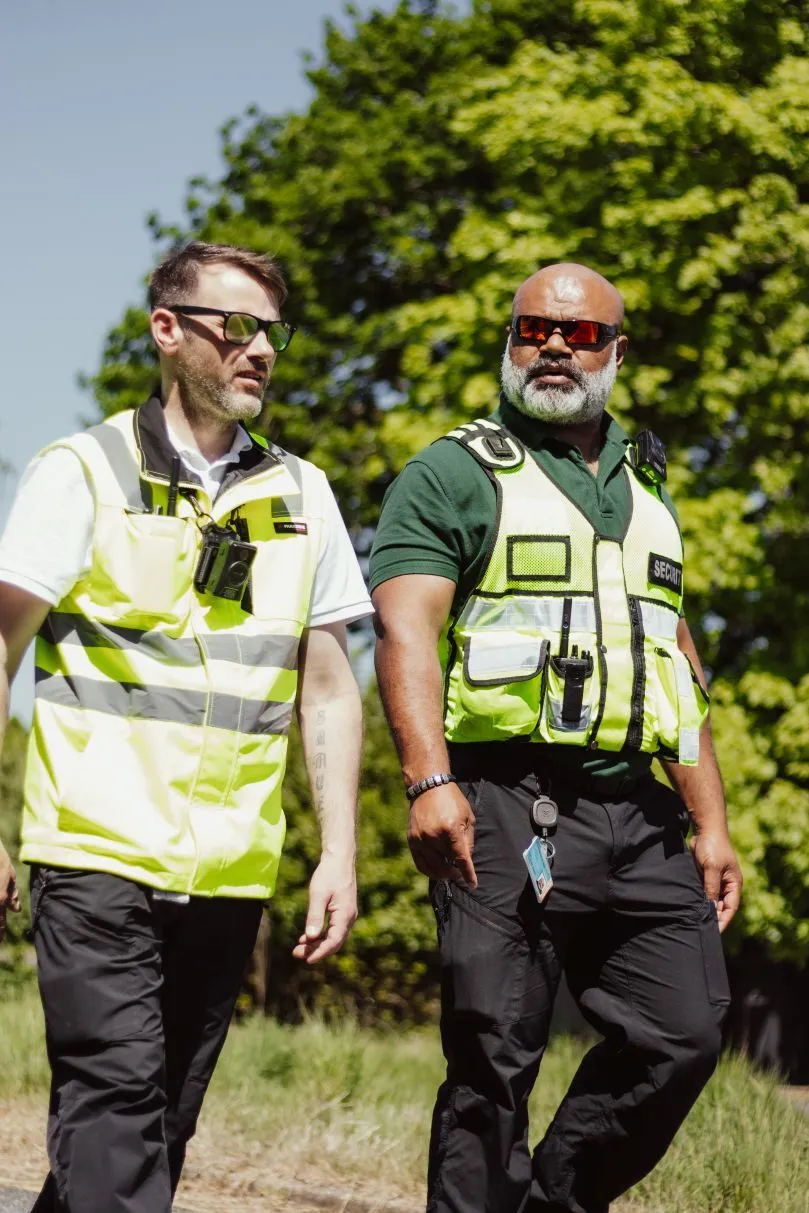
One common weakness in event planning is assuming all front-line staff do the same job. In reality, stewards, door supervisors, and security officers often have different responsibilities.
- Stewards: Usually focus on customer guidance, monitoring, wayfinding, basic queue support, and reporting concerns.
- Door Supervisors: Often handle searching, entry decisions, behaviour management, and licensed premises duties where required.
- Security Officers: May oversee access points, patrol restricted areas, protect assets, and respond to security incidents.
Where security operatives carry out licensable activity, organisers should make sure the right staff are appropriately licensed through the Security Industry Authority. Briefing is just as important. Even experienced teams need site maps, escalation procedures, radio protocols, and clear reporting lines before the event opens.
For events that need visible support at entrances, compounds, or sensitive areas, Lead Element Security provides manned guarding and tailored deployment options.
Plan For Queues, Pinch Points And Surges
Queue management for events is more important than many organisers realise. A poorly designed queue can quickly become a safety issue, especially when people cannot see why progress has slowed.
To reduce queue-related risk:
- Estimate Arrival Peaks: Use ticket data, start times, and travel patterns to predict demand.
- Create Sufficient Search And Ticket Lanes: Match processing capacity to arrival volume.
- Use Clear Lane Signage: Separate pre-booked guests, VIPs, staff, contractors, and accessible entry where needed.
- Avoid Blind Corners And Tight Barriers: These can hide pressure build-up until it becomes serious.
- Monitor Waiting Times: Long delays increase frustration, queue jumping, and surge potential.
- Keep Emergency Access Clear: Queues must not spill into fire routes or vehicle lanes.
This is an area many generic articles miss. Entry design is directly linked to crowd surge risk. The safest approach is to treat the queue as part of the event footprint, not as a temporary inconvenience outside the gate.
Improve Communication, Signage And Public Information
Clear communication helps prevent confusion and reduces hesitation in busy spaces. People make better decisions when information is easy to see, hear, and understand.
Useful measures include:
- Pre-Event Emails: Explain arrival times, prohibited items, search policy, access routes, and re-entry rules.
- Wayfinding Signage: Mark entrances, exits, toilets, welfare areas, information points, and accessible routes.
- Queue Messaging: Tell people what to prepare before reaching the front, such as tickets or bag opening.
- Public Address Systems: Use calm, consistent announcements to direct movement or respond to delays.
- Staff Visibility: Easily identifiable teams make it simpler for attendees to ask for help.
Communication should also cover safeguarding, including how attendees can report concerns or find welfare support.
Prepare Incident, Evacuation And Lockdown Procedures
No event plan is complete without a documented incident response plan. Organisers should be clear about what happens if there is disorder, severe weather, a medical emergency, a fire alarm, suspicious behaviour, or a need to stop entry immediately.
Your procedures should define:
- Decision Makers: Who has authority to pause entry, stop the event, evacuate, or lock down areas.
- Communication Methods: Radios, mobile backups, public address scripts, and control room escalation.
- Assembly And Holding Areas: Safe locations for evacuated guests, staff, or isolated groups.
- Emergency Services Liaison: Contact points, site access routes, and shared information.
- Incident Logging: Accurate records help immediate response and post-event review.
The UK Government crowded places guidance is useful when considering protective security and threat reduction for publicly accessible spaces. For wider physical protection measures, the National Cyber Security Centre physical security guidance is also worth reviewing.
Why Access Control Matters For Event Safety
Strong access control does more than stop gatecrashers. It supports crowd safety, prevents restricted area breaches, protects staff and performers, and helps maintain order during an incident. It is one of the most practical ways to reduce risk across the whole venue.
Ticket Checks, Credentials And Guest Verification
Organisers should confirm that every person entering has the right to be there, and the right level of access once inside.
- Use Reliable Ticket Validation: Prevent duplicate use, screenshot abuse, or invalid entry.
- Issue Role-Based Accreditation: Staff, contractors, media, and VIPs should have clearly different credentials.
- Check Identity Where Necessary: This is especially important for artists, crew, suppliers, or high-security events.
- Control Re-Entry: Make the rules clear and apply them consistently.
Digital systems can help, but only if front-line teams understand the process and know what to do when credentials do not match.
Bag Checks, Screening And Prohibited Items
Event entry screening should be proportionate to the event risk, audience profile, and venue type. Screening can include visual bag checks, searching, wanding, or other agreed procedures.
To keep screening effective:
- Publish A Bag Search Policy: Tell attendees what to expect before they arrive.
- Train Search Teams Properly: Consistency reduces missed items and complaints.
- Define Prohibited Items Clearly: Include weapons, glass, pyrotechnics, drugs, or event-specific risks.
- Provide Secondary Search Areas: Deal with issues without blocking the main flow.
Protecting VIP, Staff-Only And Back-Of-House Areas
Many access failures happen away from the public eye. Staff entrances, dressing rooms, production spaces, storage areas, and loading bays often carry a higher trust level, which can make them vulnerable.
Reduce risk by:
- Separating Public, Staff, And Supplier Routes: Do not rely on informal boundaries alone.
- Checking Deliveries And Contractors: Verify names, timing, company details, and access needs.
- Assigning Zone Access By Task: Not every staff member needs full-site access.
- Patrolling Quiet Areas: Empty corridors and rear entrances can become weak points.
Legal And Compliance Considerations For UK Event Organisers
UK organisers have legal duties around health and safety, risk assessment, and safe event operation. Exact requirements depend on the nature of the event, the venue, the licence conditions, and the activities taking place.
Health And Safety Duties
As a starting point, organisers should understand their responsibilities under health and safety law. The HSE expects those in control of events to assess risks and put suitable precautions in place. This includes protecting workers, attendees, contractors, and others affected by the event.
That means you should be able to show:
- A Suitable Risk Assessment: Covering real hazards rather than generic statements.
- Competent Staffing: Trained stewards, security, and supervisors with clear roles.
- Safe Systems Of Work: Including entry procedures, traffic management, and emergency arrangements.
- Review And Adjustment: Plans should be updated if attendance, threats, or site conditions change.
Licensing, Emergency Services Liaison And Documentation
Depending on the event, organisers may also need to manage licence conditions, Temporary Event Notice requirements, safety advisory group engagement, and liaison with police, fire, and ambulance services.
Important documents can include:
- Event Management Plan: The core operational document for delivery.
- Crowd Management Plan: Covering ingress, egress, monitoring, and contingencies.
- Access Control Plan: Defining entry rules, searches, credentials, and restricted zones.
- Emergency Evacuation Plan: Detailing triggers, roles, routes, and assembly areas.
- Briefing Records: Evidence that teams received the right instructions.
Event Security Checklist Before The Day
Before opening the gates, organisers should run a practical final review, not just a desk-based check. This is where operational detail makes the difference.
Questions To Ask Before Opening The Gates
- Has The Risk Assessment Been Updated? Check for any late changes in attendance, layout, weather, or threat picture.
- Are Capacity Limits Defined? Confirm whole-site and area-specific numbers.
- Are Entry Lanes Ready? Ensure ticketing, search areas, barriers, and signage are in place.
- Are Emergency Routes Clear? Verify exits, gates, corridors, and vehicle access points.
- Are Restricted Areas Secured? Check staff doors, loading bays, backstage, and plant areas.
- Have Staff Been Briefed? Confirm roles, radio channels, escalation points, and welfare arrangements.
- Are Search Policies Understood? Make sure teams know what to look for and how to escalate issues.
- Is The Communications Plan Working? Test radios, battery levels, mobile backups, and PA systems.
- Are Medical And Incident Procedures Clear? Staff should know how to raise concerns quickly.
- Is Queue Overflow Planned? Have a backup plan for early surges or delays at the gate.
Organisers looking to strengthen planning standards can also review case studies and practical examples from Lead Element Security.
When Should Organisers Hire Professional Event Security?
Professional event security is worth considering whenever the risk level goes beyond basic stewarding, or when the consequences of failure are high.
You should strongly consider specialist support if your event involves:
- Large Attendance: Higher numbers increase pressure on entry, monitoring, and incident response.
- Multiple Access Points: More entrances mean more opportunities for gaps in control.
- VIPs Or Sensitive Guests: These events usually need tighter accreditation and zone protection.
- Alcohol Sales Or Late Finish Times: Behaviour risks and dispersal issues often increase.
- Open Public Sites: Parks, streets, and temporary venues can be harder to secure than fixed buildings.
- Back-Of-House Complexity: Production, deliveries, contractors, and performers add access challenges.
- Elevated Threat Concerns: Publicly accessible locations need stronger protective security thinking.
Working with Lead Element Security gives organisers access to experienced support across planning, guarding, and tailored site security. If you need event-specific advice, visit the about page or get in touch to discuss your requirements.
Fun Fact: Small Crowds Can Still Create Big Pressure
A crowd does not need to be enormous to become dangerous. Even moderate-sized gatherings can create pressure points if entry lanes, barriers, and exits are poorly designed.
Final Thoughts On Reducing Crowd And Access Risks
Reducing crowd and access risks is about much more than hiring people at the gate. It requires a joined-up plan that covers risk assessment, venue capacity, queue design, restricted areas, staff training, public communication, and emergency response.
The safest events are usually the ones where organisers think carefully about movement, behaviour, and access before the first attendee arrives. When plans are tailored to the venue and supported by trained personnel, risks become far easier to manage.
If you want help building a stronger crowd management plan or event access control strategy, Lead Element Security can support you with practical, site-specific solutions that protect guests, staff, and operations.