Table of Contents
- Are Construction Sites Required To Have Security In The UK?
- Which UK Laws And Guidance Shape Construction Site Security Expectations?
- Who Is Responsible For Construction Site Security?
- What Security Measures Are Commonly Expected On UK Construction Sites?
- When Is Security (Especially Guarding) Most Likely To Be Necessary?
- Insurance And Contract Requirements (Often Stricter Than The Legal Minimum)
- Construction Site Security Checklist (Baseline To High-Risk)
- FAQs
- Fun Fact: Most Site Losses Are About Opportunity
- Conclusion
There is no single UK law that says every construction site must have security guards. However, under CDM 2015 and wider health and safety duties, sites must take suitable, proportionate steps to prevent unauthorised access and protect the public. Controls can include fencing or hoarding, locked gates, signage, lighting, CCTV, alarms, patrols, or licensed guards. What you choose should follow your risk assessment.
If you are trying to work out the legal minimum for securing a site, focus on this principle: You must control site risks, including risks to the public from unauthorised access. You should also be able to show what you have done, and why, in your documentation and day-to-day site management.
Below is a plain-English guide to the rules that shape construction site security in the UK. It also covers who is responsible, what “reasonable and proportionate” looks like at different risk levels, and a practical checklist you can copy into your Construction Phase Plan.
Are Construction Sites Required To Have Security In The UK?
The Short Answer: No Blanket Rule For Guards, But You Must Secure The Site
UK law does not generally require every construction site to have manned security guards. What is expected is that you take suitable and sufficient measures to prevent unauthorised access and protect people from harm. Where appropriate, you should also protect property.
In practice, most sites need some form of security and public protection controls, such as:
- Perimeter barriers: Fencing or hoarding to restrict access.
- Controlled entry points: Locked gates and managed deliveries.
- Warnings and information: Clear signage and site rules.
- Deterrence and detection: Lighting, CCTV, alarms, tracking.
- Response capability: Keyholding, patrols, or licensed guarding where risk justifies it.
What “Suitable And Sufficient” (Reasonable And Proportionate) Security Means
“Reasonable and proportionate” security means your measures should match the risk. A small, low-value domestic project will not look like a city-centre redevelopment with high-value plant, high public footfall, and complex interfaces.
A quick way to check proportionality is to ask:
- What could go wrong? Trespass, falls into excavations, arson, theft, vandalism, or interference with temporary works.
- Who could be harmed? Members of the public (including children), workers, neighbours, visitors, and delivery drivers.
- How likely is it? Based on location, history of incidents, visibility, and out-of-hours exposure.
- How severe would the consequences be? Injury or fatality risks usually mean stronger controls.
- What is the least intrusive effective control? For example, better hoarding and gate discipline may reduce the need for overnight guarding.
Whatever you choose, document the rationale. Keep it under review as the site changes.
Which UK Laws And Guidance Shape Construction Site Security Expectations?
CDM Regulations 2015: Preventing Unauthorised Access And Managing Site Risks
The Construction (Design and Management) Regulations 2015 (CDM 2015) are the backbone of construction health and safety duties. CDM is not a “security law” in the traditional sense. Even so, it creates clear expectations around managing site risks and preventing unauthorised access where it could create danger.
You can read the regulations here: legislation.gov.uk, CDM Regulations 2015. For practical guidance, see: HSE guidance on CDM 2015.
In day-to-day terms, CDM means sites should implement controls that:
- Reduce the chance of unauthorised entry: Physical barriers, locked access points, and controlled routes.
- Reduce harm if entry occurs: Segregation of hazards, signage, safe storage, removal of ladders, and covering openings.
- Control work activities and site layout: So visitors and deliveries are managed safely.
HSE Public Protection Guidance: Keeping The Public Safe Around Works
Where a site interfaces with the public, the Health and Safety Executive (HSE) places strong emphasis on public protection. This includes keeping people away from hazards and managing routes, barriers, and signage. It matters even more near roads, footpaths, schools, and shops.
See: HSE, Protecting the public around construction work.
Common expectations include:
- Clear separation: Hoarding, fencing, and pedestrian management to keep people away from work areas.
- Safe access routes: Signed diversions and protected walkways where needed.
- Information: Warning signs, contact details, and rules for visitors and deliveries.
Occupiers’ Liability: Liability Risks When Trespassers Or Visitors Are Injured
Even if someone is on site without permission, there can still be legal and financial exposure if they are injured and it was reasonably foreseeable. Occupiers’ liability principles mean you should take reasonable steps to prevent injury to lawful visitors. In some cases, this also extends to trespassers, particularly where there is a known risk of trespass (for example, children entering a site near housing or schools).
This is one reason why “we put up a sign” is rarely enough on its own in higher-risk locations. Physical controls and hazard management matter.
SIA Licensing: When Security Guarding Activity Must Be Carried Out By Licensed Staff
If you decide that your site needs manned security, you also need to ensure the role is lawful. In the UK, certain security activities are regulated by the Security Industry Authority (SIA). If someone is carrying out licensable conduct, they typically need an SIA licence.
Start here: GOV.UK, Security Industry Authority.
As a practical guide:
- Generally licensable: Manned guarding to prevent unauthorised access, protect property, or respond to incidents.
- Often not licensable by itself: General site duties like booking in deliveries, operating plant, or acting as a banksman, where “security guarding” is not the purpose of the role.
Important: Job titles can be misleading. What matters is the activity being performed. If you are unsure, get formal advice or use a security provider that understands SIA boundaries.
CCTV And UK GDPR: Signage, Lawful Basis, Retention, And Access To Footage
CCTV is common on construction sites, but it must be used in a compliant way. You should follow UK GDPR and data protection principles, such as purpose limitation, data minimisation, and secure access to footage.
A reliable starting point is the ICO guidance: ICO, CCTV and video surveillance.
Good practice typically includes:
- Clear signage: Who operates the system, why it is used, and how to contact you.
- Lawful basis: Usually legitimate interests for site security and public safety, documented.
- Appropriate retention: Kept for as long as needed for the stated purpose, not “just in case”.
- Controlled access: Limit who can view, export, or share footage, and keep an audit trail.
- Secure exporting: Preserve originals, export relevant clips, and store them securely for police or insurers.
Who Is Responsible For Construction Site Security?
Client Vs Principal Contractor Vs Contractors: Where Security Typically Sits Under CDM
Security responsibilities usually sit across multiple dutyholders. On most projects, the principal contractor organises day-to-day control of the site, including access and site rules. The client must make suitable arrangements for managing the project, including adequate time and resources. Contractors must follow site rules and manage their activities safely.
In practice, this often looks like:
- Client: Ensures arrangements and resources exist for safe management, including expectations for securing the site.
- Principal Contractor: Plans, manages, and monitors the construction phase, sets access controls and perimeter standards, and coordinates contractors.
- Contractors: Comply with access rules, secure tools and materials, report defects, and avoid creating opportunities for unauthorised entry.
To reduce disputes later, align security expectations early in procurement and contracts. Then keep them consistent in site documentation and inductions.
Where It Should Be Documented: Construction Phase Plan And Site Rules
To meet “evidence readiness” expectations from regulators, insurers, and clients, security should be documented and maintained, not just discussed. Common places include:
- Construction Phase Plan (CPP): Site layout, access points, public protection measures, and emergency arrangements.
- Risk assessments and method statements: Especially for high-risk interfaces, demolition, and temporary works.
- Site induction and rules: Sign-in procedures, visitor control, and tool and plant security requirements.
- Incident reporting process: What to do for theft, vandalism, arson, or trespasser injury.
If you need help building a risk-based approach, Lead Element Security can support you with site-specific guarding and patrol strategies. See construction site security services.
What Security Measures Are Commonly Expected On UK Construction Sites?
Perimeter Security: Fencing, Hoarding, Gates, Locks And Vehicle Barriers
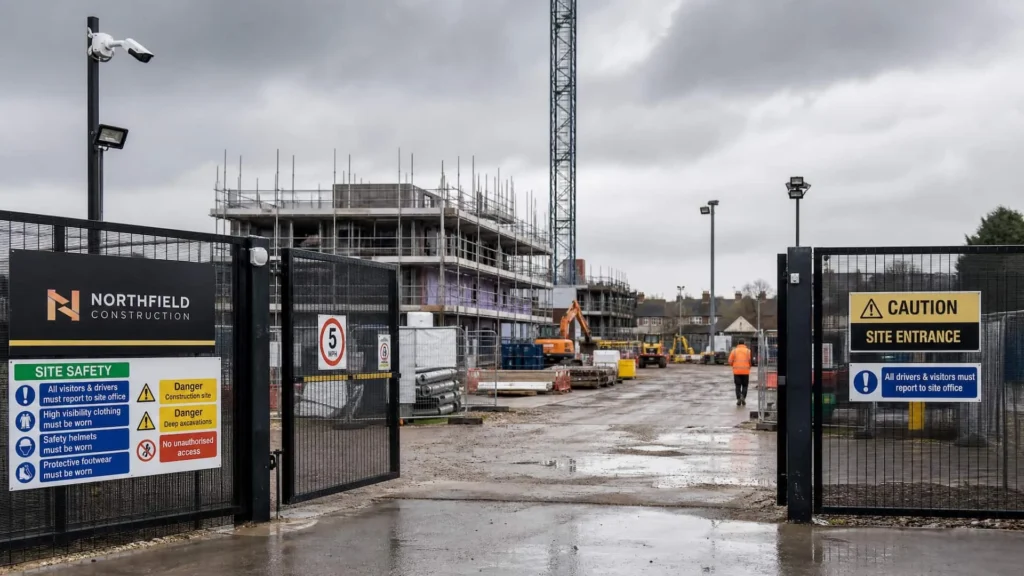
The perimeter is your first line of defence. It is also one of the biggest factors in whether a site becomes an easy target. Common measures include:
- Hoarding or secure fencing: Appropriate height and build quality, with regular inspection and prompt repair.
- Locked gates: Controlled keys, key logs, and end-of-day checks.
- Anti-ram or vehicle barriers: Where there is a risk of vehicle-borne theft or intrusion.
- Removal of climbing aids: Store ladders, scaffold components, and pallets so they cannot be used as steps.
Access Control: Sign-In, Passes, Delivery Controls And Visitor Management
Access control is about knowing who is on site and keeping unauthorised people out. Typical arrangements include:
- Sign-in and sign-out: A register that can be used for emergency roll calls.
- Visitor procedures: ID checks where appropriate, inductions, escorts, and PPE rules.
- Delivery management: Set delivery times, call-ahead rules, and designated drop zones.
- Out-of-hours access: A clear process for authorised entry, including logging and supervision.
Deterrence: Lighting, Signage And Visible Routines
Deterrence is often low-cost and high-impact, particularly against opportunistic theft and vandalism. Consider:
- Lighting: Keep gates, dark corners, and storage areas well lit, ideally with tamper-resistant fixtures.
- Signage: Warn of hazards, “no unauthorised access”, and CCTV operation where relevant.
- Visible routines: Lock-up checks, clear responsibilities, and rapid repair of fence breaches.
Detection: CCTV, Intruder Alarms, Remote Monitoring And Asset Tracking
Detection helps you know something is happening, not just what happened afterwards. Options include:
- CCTV: Fixed or redeployable systems, positioned to cover access points, storage, and blind spots.
- Monitored alarms: Linked to a response plan so activations are not ignored.
- Remote monitoring: Often effective for out-of-hours periods and larger sites.
- Asset tracking: Tags and trackers for high-value plant, tools, and generators.
Response: Keyholding, Mobile Patrols And Manned Guarding
Response is how you turn detection into action. Common approaches include:
- Keyholding and alarm response: A defined call-out process and trained responders.
- Mobile patrols: Randomised patrol patterns and documented checks.
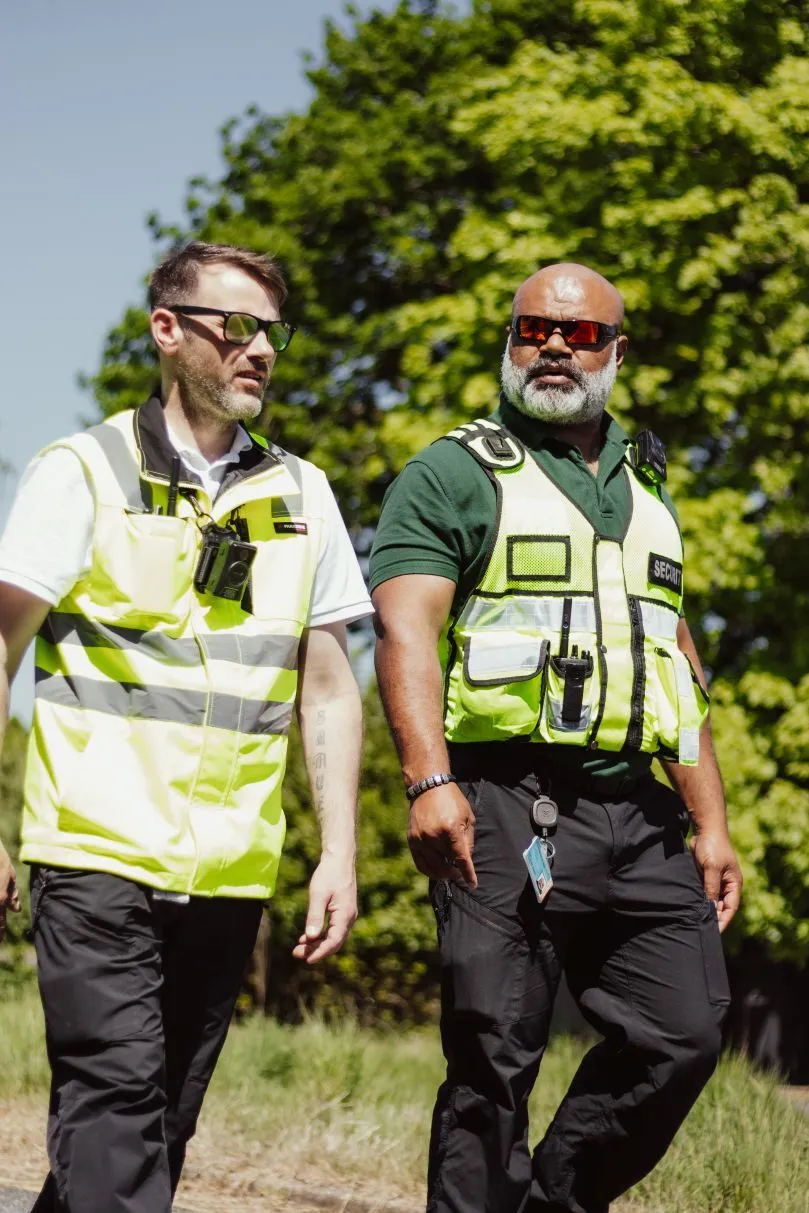
- Manned guarding: Where risk justifies a constant presence, entry control, or active deterrence.
Learn more about options from Lead Element Security: manned guarding and security patrol contractors.
When Is Security (Especially Guarding) Most Likely To Be Necessary?
High-Value Plant And Materials (Tools, Copper, Fuel, Cables, HVAC Units)
Guarding or monitored systems are most likely to be justified when the site stores attractive, portable, or high-resale items, for example:
- Tools and small plant: Easy to remove and quick to resell.
- Copper and cable: Often targeted during first fix.
- Fuel: Commonly taken from tanks and bowsers.
- HVAC and appliances: Higher value items, often during fit-out and handover.
High Footfall Areas: Town Centres, Near Schools, Public Rights Of Way And Transport Hubs
Where the public is close to the works, the risk of trespass and accidental entry rises. Stronger controls may be needed. This could include improved hoarding, dedicated access supervision, and more robust signage and lighting.
Higher-Risk Phases: Demolition, First Fix/Second Fix, Fit-Out, And Handover Periods
Security needs change over the build lifecycle:
- Early works and demolition: Higher safety risk to trespassers due to unstable structures, excavations, and plant movements.
- First fix: Copper, cabling, and materials become attractive theft targets.
- Second fix and fit-out: Higher value finishes and appliances arrive, and more subcontractors increase access complexity.
- Handover and snagging: Sites can be quiet but stocked with valuable items, and reputational stakes are high.
Out-Of-Hours Vulnerabilities: Weekends, Shutdowns, And Mothballed Sites
Theft and vandalism often happen when sites are quiet. Risk can rise during:
- Weekends and holidays: Longer windows of opportunity.
- Project pauses: Reduced supervision and slower repairs to barriers.
- Mothballed or vacant sites: Deteriorating perimeters and predictable emptiness.
For these periods, consider time-limited measures like overnight monitoring, patrols, or short-term guarding rather than permanent arrangements.
Insurance And Contract Requirements (Often Stricter Than The Legal Minimum)
Typical Policy Conditions That Affect Theft And Vandalism Cover
Even if your site meets legal duties, insurers and funders may set stricter conditions for theft and vandalism cover. Common examples include:
- Perimeter standards: Minimum fencing or hoarding expectations.
- Secure storage: Tools and materials in locked containers, cabins, or cages.
- Key control: Documented control of keys and lock-up procedures.
- Alarm and CCTV requirements: Systems must be in use, maintained, and sometimes monitored.
- Plant immobilisation: Isolators, tracking, or removal of keys.
If you make a claim, insurers may look for evidence that conditions were followed. That is why your documentation and logs matter.
Evidence Readiness: Incident Logs, Photography, And Exporting CCTV Properly
If something goes wrong, your response in the first hour can make a real difference. Build an “evidence readiness” routine:
- Incident log: Record times, locations, actions taken, and who was notified.
- Photographs: Capture entry points, damage, tool storage, and any footprints or tyre marks.
- CCTV handling: Preserve the original footage, export relevant clips, and document the chain of custody.
- Corrective actions: Repair fences, change locks, adjust lighting, and update patrol routes.
Example Workflow (Theft Or Vandalism):
- Make Safe: Stop works if needed and make hazards safe.
- Preserve Evidence: Restrict access to affected areas.
- Document: Photos, statements, and an incident log entry.
- Notify: Police (if required), client, insurer, and key stakeholders.
- Review Controls: Identify the breach point and implement immediate improvements.
Construction Site Security Checklist (Baseline To High-Risk)
Use the checklists below as a starting point. Then tailor them to your risk assessment and your site’s specific hazards and location.
Baseline Controls Most Sites Should Have
- Perimeter Defined: Fencing or hoarding that is intact, stable, and regularly inspected.
- Gates Locked: Controlled entry points with end-of-day lock-up checks.
- Hazards Secured: Openings covered, ladders removed, and chemicals stored safely.
- Signage Displayed: Warning signs, “no unauthorised access”, and emergency contact details.
- Visitor Rules: Sign-in, induction, escort policy, and PPE requirements.
- Tool And Plant Security: Locked storage, immobilisation, and key control.
- Lighting Considered: Adequate lighting at entrances and storage areas where needed.
- Incident Process Set: Clear reporting route and evidence handling steps.
Enhanced Controls For Higher-Risk Sites
- Upgraded Perimeter: Stronger hoarding, anti-climb measures, and vehicle barriers where needed.
- Monitored CCTV: Coverage of gates, compounds, and key internal routes, with compliant signage.
- Intruder Alarm: Monitored alarms on cabins, stores, and compounds.
- Patrol Strategy: Randomised mobile patrols with logged checks and escalation procedures.
- Access Control Tightened: Passes, stricter visitor ID, and controlled delivery windows.
- High-Value Storage: Caged compounds, tool marking, and asset tracking for critical plant.
- Guarding Where Justified: Licensed guarding for high theft risk, high public interface, or repeated incidents.
| Site risk level | Typical indicators | Proportionate controls |
|---|---|---|
| Baseline | Low public interface, low-value materials, short duration | Secure perimeter, locked gates, signage, basic lighting, tool storage, visitor controls |
| Enhanced | Urban area, repeated theft locally, valuable deliveries, longer programme | Improved hoarding, monitored CCTV, intruder alarms, mobile patrols, tighter access control |
| High-Risk | High public footfall, high-value plant, complex site, out-of-hours exposure | Licensed guarding, robust access control, remote monitoring, vehicle barriers, enhanced response plan |
FAQs
Do Small Domestic Building Sites Need Security?
Often yes, but usually at a lighter level. Small domestic sites still have duties to protect the public and manage hazards, especially if the site is accessible from the street or near schools or footpaths. Practical steps often include secure fencing or barriers, locked gates where possible, hazard controls, and safe storage of tools and materials.
Is A Fence And A Sign Enough?
Sometimes for low-risk work, but often not. A fence and a sign can form part of a reasonable approach. If there is a foreseeable risk of entry or harm, you may need stronger measures such as better hoarding, locked access points, lighting, or CCTV. The test is whether your controls are suitable and sufficient for your risk level.
Can I Use General Site Staff As Security?
You can allocate site management tasks such as opening and closing gates, managing deliveries, or monitoring who enters the site. However, if someone’s role becomes “manned guarding”, or they are actively preventing unauthorised access as a security function, it may become licensable activity requiring an SIA licence. If in doubt, use trained, compliant security support.
What Happens If Someone Trespasses And Gets Injured?
It can trigger investigations, claims, and reputational harm, particularly if it was foreseeable that people might enter the site. Good perimeter controls, hazard management, signage, and documented inspections help show you took reasonable steps to prevent harm.
Do Security Guards On Construction Sites Need An SIA Licence?
Where the role involves licensable security activity, yes. Always verify licences and use a provider that understands SIA requirements. You can also check official guidance via GOV.UK, the SIA.
If you would like a site-specific recommendation, Lead Element Security can help you match controls to your risk level, from patrols to manned guarding. Explore construction site security options, view relevant case studies, or contact Lead Element Security for a practical plan.
Fun Fact: Most Site Losses Are About Opportunity
Many construction site losses are opportunistic rather than sophisticated. Simple weaknesses like an unlocked gate, predictable delivery patterns, or poor lighting often create the opportunity. Thinking in terms of “removing opportunity” helps teams choose measures that are reasonable and proportionate.
Conclusion
Construction sites in the UK are not automatically required to have security guards. However, they are expected to be secured in a suitable and sufficient way. CDM 2015 duties, HSE public protection expectations, occupiers’ liability risks, SIA licensing rules for guarding, and UK GDPR obligations for CCTV all shape what good practice looks like.
The safest approach is risk-based. Secure the perimeter, control access, deter and detect problems, and make sure your response and documentation stand up to scrutiny from clients, regulators, and insurers. If you want a clear, compliant plan tailored to your site, speak to Lead Element Security via the contact page or learn more about Lead Element Security.